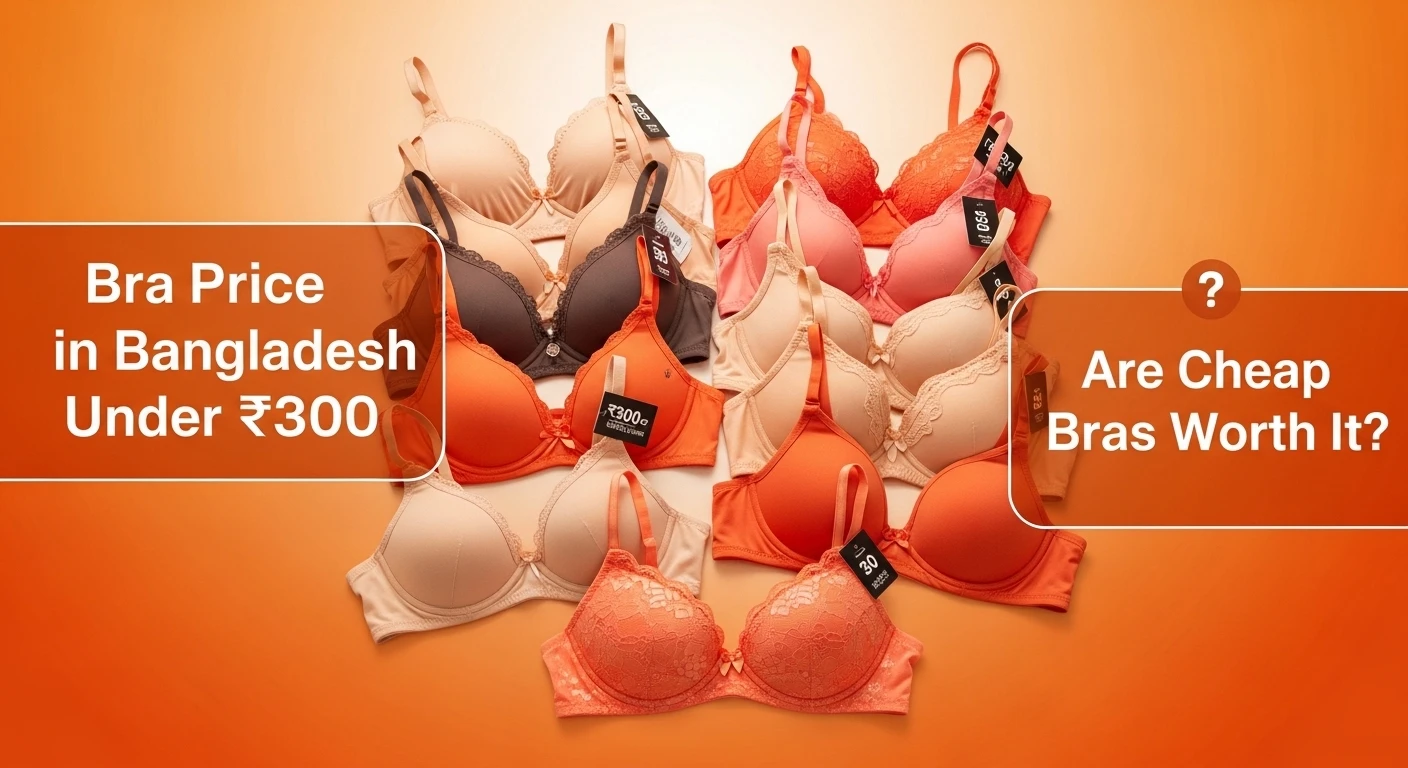
Walk through any local market in Dhaka, Chittagong, Sylhet, or any district town in Bangladesh and you will find bras selling for ৳100, ৳150, ৳200, even ৳250. They come in bright packaging, promise comfort and support, and are available in sizes that seem to cover most women. They are everywhere, they are affordable, and millions of women buy them every year.
The question this article addresses honestly is a simple one: are these cheap bras actually worth buying? Do they do what a bra is supposed to do? Are there health implications to wearing very cheap bras daily? And if the answer is that they are not worth it, what is the minimum you should realistically spend to get a bra that does its job properly?
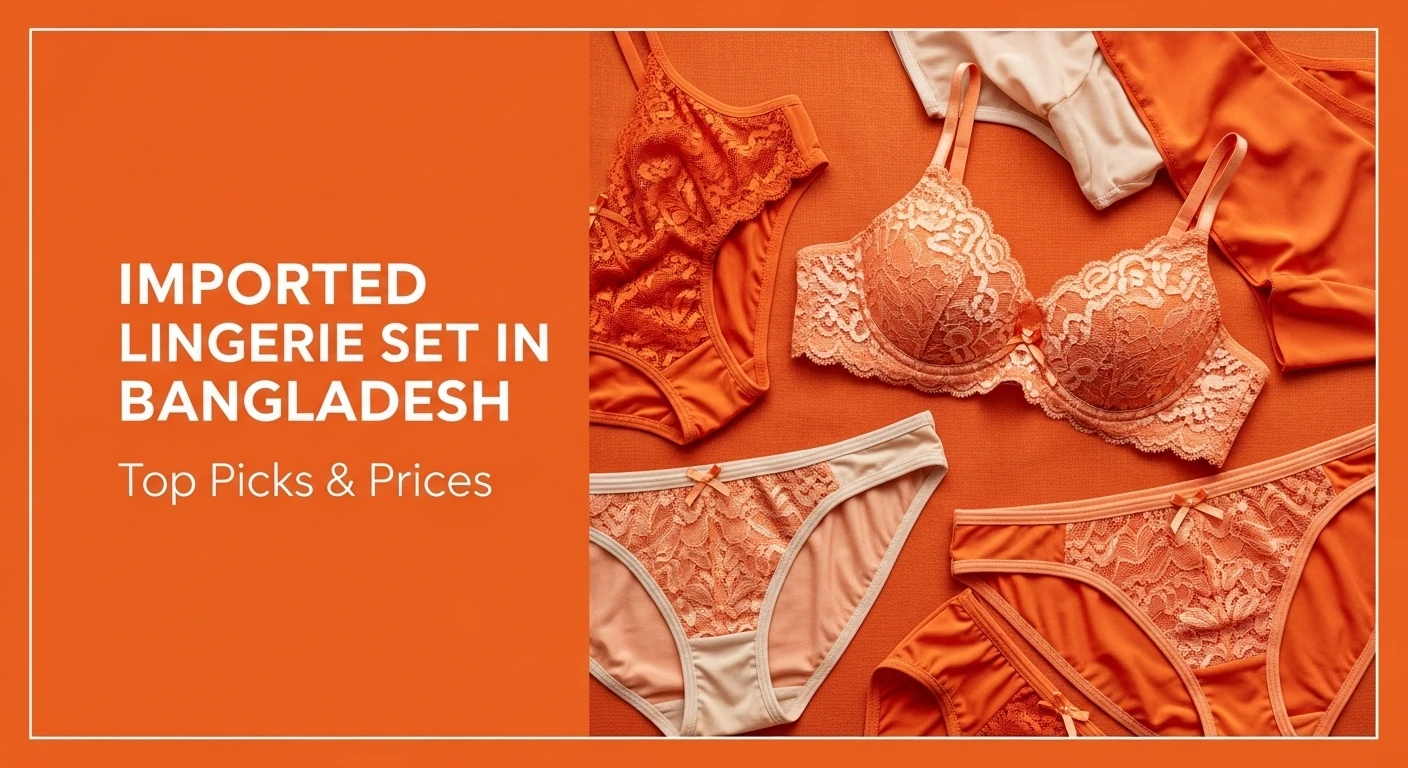
These are practical questions that matter to everyday Bangladeshi women managing real household budgets. This guide gives you honest answers — not a sales pitch to spend more than you need to, and not a dismissal of budget constraints that are real and valid. You can browse bra and lingerie options across all price points at AliPeak including the lingerie sets collection for styles that balance quality and affordability.
What You Actually Get in a Bra Under ৳300
To answer the question fairly, it helps to understand what goes into a bra under ৳300 in terms of materials and construction — because the price is not arbitrary. It reflects specific choices made by manufacturers to hit the lowest possible price point.
Fabric: Bras in this price range almost universally use basic synthetic fabric — typically a polyester-spandex blend for the cups and band, with a thin synthetic lining. The outer fabric may look presentable initially but tends to pill, thin, and lose its texture relatively quickly with repeated washing. The inner lining in contact with skin is often rough or neutral rather than genuinely soft. Cotton is rarely used at this price point because it costs more to source and produce.
Padding: Where padding is present, it is typically thin foam cut to a basic shape rather than precisely engineered and moulded foam. This padding provides some visual shaping but compresses with wear and flattens relatively quickly. It does not retain its shape through many washes.
Underwire: Some bras under ৳300 include underwire, but the quality is almost universally poor. The wire is often rigid rather than slightly flexible, poorly shaped for most body types, and encased in thin fabric that begins to wear through within a few months of daily wear. Once the underwire casing wears through, the metal wire pokes through and makes the bra unwearable — and potentially scratches the skin.
Band and elastic: The band in a very cheap bra uses thin, low-grade elastic that stretches out quickly. A band that fits snugly on the first wear may be noticeably looser after a month of regular wearing. Once the band loses its elasticity, the bra loses its support — because the band provides approximately 80% of a bra's support function.
Hook-and-eye closure: Budget bras typically have only one or two hook positions rather than three, limiting the ability to tighten the band as elastic stretches. The hooks themselves are often thin and can bend or open under tension.
Sizing: This is perhaps the most significant limitation of bras under ৳300 in Bangladesh. The overwhelming majority are sold as S, M, L, XL rather than proper bra sizing (band number plus cup letter, such as 34B or 36C). These generic size labels cannot account for the real variation in women's bodies — a "Medium" label may fit the band of one woman but be completely wrong for her cup size, or vice versa. Proper bra sizing is fundamental to a bra doing its job correctly, and it is simply not available at this price point for most products.
The Honest Assessment: What Cheap Bras Do and Do Not Do
Being honest about cheap bras means acknowledging both what they do adequately and what they genuinely fail at.
What cheap bras do reasonably:
They provide basic modesty coverage. For women who need coverage under clothing and where precise support or fit are not critical requirements, a cheap bra fulfils this function adequately.
They provide a visual bra shape under clothing for women with smaller bust sizes (AA to A cups), where structural support is less critical and the primary function is shaping rather than weight-bearing support.
They serve as an emergency or temporary replacement when a regular bra is unusable. If your everyday bra breaks the night before an important day and you need a replacement immediately, a ৳200 bra from the local market is a functional stopgap.
They work adequately for very occasional, short-duration wear — a few hours for a specific purpose — rather than all-day everyday use.
What cheap bras do not do:
They do not provide reliable support for women with medium to larger bust sizes (B cup and above) where genuine structural support matters. The band elastic is not firm or durable enough and the cup construction is not precise enough to support breast tissue correctly over a full day of wear.
They do not maintain their fit and function over time. The combination of stretching band elastic, compressing padding, and degrading fabric means that a ৳200 bra begins losing its functional effectiveness within weeks to months of daily wear.
They do not fit correctly in the way a properly sized bra does. Generic S/M/L labels mean the vast majority of women are wearing a size that is wrong for their actual measurements, producing all the discomfort and posture problems associated with an ill-fitting bra.
They do not have underwire that can be trusted for extended daily use. The thin casing on cheap underwire bras is a genuine concern — once the wire pokes through, the bra can scratch and irritate skin.
The Health and Comfort Implications
This section addresses a question that is genuinely important and worth taking seriously.
Posture and musculoskeletal comfort: A bra that provides insufficient support — because the band is too loose, the cups are wrong, or the construction has failed — means that breast tissue is not properly supported during daily activity. For women with medium to larger cup sizes, this matters. Inadequate support over long periods can contribute to shoulder and back discomfort that accumulates through a working day. This is not a minor concern — it affects comfort, concentration, and energy levels.
Skin irritation: The synthetic fabric and poor finishing on very cheap bras is a frequent cause of skin irritation, particularly around the underwire area, the band edges, and any area where rough fabric or scratchy lace contacts the skin for extended periods. In Bangladesh's warm and humid climate, the combination of synthetic fabric that traps heat and poorly finished seams is particularly prone to causing skin irritation and rashes.
Underwire safety: As mentioned above, the thin underwire casing on budget bras wears through relatively quickly. A bra where the underwire is actively poking through the fabric should be discarded immediately — wearing it risks scratching or cutting the skin and potentially the breast tissue. Women should check their underwire bras regularly for this issue.
Fabric chemical concerns: Very cheap imported bras — particularly those manufactured at the lowest possible price point — sometimes use fabrics with chemical finishes or dyes that are not skin-safe. While this is not universal and responsible manufacturers exist at all price levels, the risk is highest at the extreme budget end of the market. If a new bra causes immediate skin irritation or an unusual smell, discontinue wearing it.
Psychological impact: This is less discussed but genuinely relevant. A bra that fits poorly, provides inadequate support, or causes discomfort creates a level of low-grade physical distraction throughout the day that accumulates. Women who switch from consistently ill-fitting cheap bras to a properly fitted mid-range bra almost universally report an immediate and noticeable improvement in daily comfort and body confidence.
The Real Cost of Cheap Bras: A Value Calculation
The argument for cheap bras is straightforward: they cost ৳200 to ৳300 and provide a bra. The argument against is equally straightforward once you calculate the real cost.
A ৳250 bra that loses its elasticity and effective support within three months of daily wear and needs to be replaced costs ৳1,000 per year if replaced four times. This is more than a mid-range bra costing ৳700 to ৳900 that maintains its fit and function for twelve to eighteen months with proper care.
The cheap bra also provides inferior comfort and support during those three months. The real cost of the cheap bra is therefore higher in both monetary and comfort terms than the mid-range alternative.
This calculation does not mean that every woman should immediately spend ৳900 on a bra. It means that the apparent savings of buying the cheapest available option are largely illusory once replacement frequency and comfort quality are factored in. Spending modestly more to reach the ৳500 to ৳700 tier delivers dramatically better value per wear than spending the minimum to reach the ৳200 to ৳300 tier.
For women with genuine budget constraints, the more rational strategy is to own fewer bras of better quality rather than many bras of very low quality. One good bra used carefully is worth more in practical terms than three cheap bras worn into dysfunction within months.
When a Cheap Bra Is an Acceptable Choice
This guide is not arguing that no one should ever buy a bra under ৳300. There are situations where it is a reasonable choice.
As a disposable piece for a single occasion. If you need a specific colour or style for one day — for a photoshoot, for a costume, for a short event — and you have no intention of wearing it regularly, the durability limitations of a cheap bra are irrelevant.
As a stopgap replacement. If your regular bra becomes unwearable unexpectedly and you need a replacement immediately, a cheap bra from the local market solves the immediate problem while you arrange to buy a proper replacement.
For smaller cup sizes with minimal support requirements. Women with AA or A cup sizes who do not need significant structural support can often wear inexpensive bras more successfully than women with larger cups, because the support load is small and the consequences of inadequate support are less severe.
For occasional leisure wear at home. A cheap bralette or soft bra worn for a few hours while relaxing at home is a different use case than an underwire bra worn for ten hours at work. For purely at-home comfort wear, the quality ceiling required is lower.
For very young girls buying their first bras. Starter bras for young girls who are beginning to wear bras for the first time are a legitimate use case for inexpensive simple bras, where the fit requirements and support needs are minimal and the pieces will be quickly outgrown.
The Minimum You Should Spend for a Functional Everyday Bra
Based on what is available in the Bangladeshi market and what each price tier actually delivers, the minimum realistic investment for a bra that fits properly and supports adequately for daily wear is approximately ৳500 to ৳600.
At this price point, cup-sized bras (32B, 34C, and so on) become available, meaning you can actually find a bra that matches your measurements rather than an approximation. Band elastic is significantly more resilient. Cup construction is better shaped. Inner lining fabric is softer. Underwire (where present) is better encased and positioned.
A ৳600 bra is not a premium product — it is a functional, honest product that does what a bra is supposed to do and keeps doing it for a reasonable period with proper care. It represents a meaningful step up from the sub-৳300 tier in every dimension that affects daily wear experience.
If ৳500 to ৳600 is still beyond the current budget, the most practical strategy is to save toward it and buy one decent bra rather than multiple cheap ones simultaneously. In the interim, use the cheap bra for the limited situations described above — occasional wear, at-home comfort, short-duration use — rather than as the daily main bra.
What to Look For Even at Lower Price Points
If you do need to buy a bra at a lower price point, these criteria help you find the least-bad option within the budget range.
Avoid underwire if the quality is uncertain. A wire-free soft bra at ৳250 is safer for daily extended wear than an underwired bra at ৳250 where the wire casing may wear through. The support is lower but the risk of skin irritation is reduced.
Choose the softest inner fabric you can find. Run the bra's inner lining against your wrist. If it scratches, it will scratch all day. Find an option that feels as soft as possible for the price.
Look for cotton or cotton-blend fabric. At any price point, a cotton or cotton-blend bra is more breathable and gentler on skin than a fully synthetic alternative. Cotton bras at ৳200 to ৳300 do exist and are preferable to entirely synthetic options.
Check that the band is firm but not rigid. The band should resist stretching when you pull it — if it stretches easily with minimal force on the first wear, it will be too loose within weeks.
Check the hook-and-eye closure. Even at ৳250, look for a bra with three hook positions rather than one or two. More hook positions mean you can tighten the band as it inevitably loosens over time.
Avoid cheap lace against skin. Some budget bras use lace panels that sit directly against the skin without lining. Cheap synthetic lace is scratchy and becomes more so with washing. If buying a lace-style bra at a low price point, ensure the lace has at least a minimal fabric lining on the interior.
Making the Transition to Better Quality
For women who have always bought the cheapest available bras and are considering making a change, the transition to better quality does not need to happen all at once.
Start with one properly sized mid-range bra in the most useful colour for your wardrobe — typically nude or black. Measure your underbust and bust, calculate your correct cup size (underbust measurement for the band, minus that from your bust measurement for the cup), and buy one bra in that actual size from a platform that carries cup-sized options.
Wear it for a week alongside your existing bras and pay attention to the difference in comfort, fit, and how your clothing looks. For most women, this single experience is immediately persuasive — the difference between a properly sized, adequately constructed mid-range bra and a cheap generic-sized bra is noticeable from the first full day of wear.
From that point, gradually replace cheap bras as they wear out with better-quality alternatives, rather than replacing like-for-like. Over the course of six to twelve months, the wardrobe transitions to a smaller number of better-quality pieces that fit correctly and serve reliably.
AliPeak stocks a range of women's bras and lingerie sets across different price points including accessible mid-range options that are meaningfully better than budget-tier products without requiring an unrealistic spending jump. Browsing with your actual measurements in hand makes the selection process much more straightforward than guessing from a generic size label.
The honest answer to the question in this article's title is: cheap bras under ৳300 are worth it only in very specific, limited situations. For daily wear, for any woman with a B cup or above, for any situation where comfort through a full day matters, and for any woman who wants her bra to last — they are not worth it. The real cost, measured in replacement frequency, daily discomfort, posture implications, and skin irritation risk, is higher than it appears on the price tag.
The minimum worth spending for a functional everyday bra is around ৳500 to ৳600. For most women, reaching ৳700 to ৳900 delivers the best practical value in the Bangladeshi market. These are not luxury numbers — they represent the realistic floor for a product that does its job reliably day after day.
 english




 Automotive
 Gifts & Occasions
 Electronics & Computers
 Fashion & Apparel
 Beauty & Personal Care
 Home & Lifestyle
 Sports & Fitness
 Books, Movies & Music
 Baby & Kids