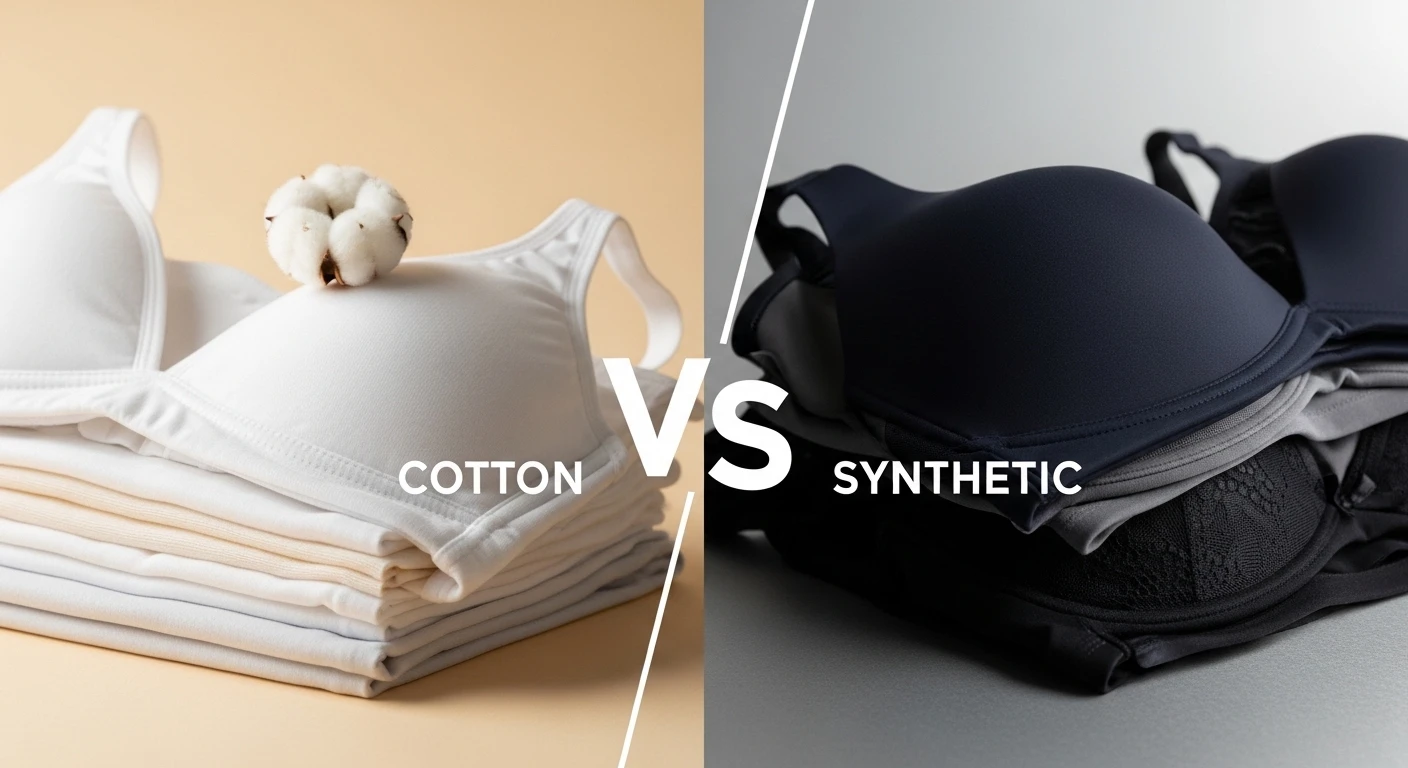
Every woman in Bangladesh faces this choice every time she buys lingerie, even if she does not consciously think about it in these terms. The bra and panty set on the shelf — is it cotton or synthetic? Does it matter? Is the softer-feeling synthetic actually better than the plain cotton? Is the cotton more breathable but less durable? Which one holds up better in the wash? Which one is actually safer to wear against the skin every single day?
These are not trivial questions. Lingerie is worn every day, in direct contact with some of the most sensitive skin on the body, for twelve to sixteen hours at a time. The fabric you wear that close to your body, that consistently, has genuine effects — on skin health, on comfort, on odour management, and on how your clothes feel and look over the course of a day. In Bangladesh's climate specifically, these effects are amplified by heat and humidity.
This guide gives you a complete, honest comparison of cotton and synthetic lingerie fabrics for daily use — covering comfort, breathability, skin health, durability, washing ease, and price — so you can make a genuinely informed choice rather than buying by habit or by whatever happens to look the most appealing on a product page.
You can browse lingerie sets in both cotton and synthetic styles at AliPeak, including a wide range in the lingerie sets collection with delivery across Bangladesh.
Defining the Categories
Before the comparison, it helps to be precise about what each category actually includes — because both cotton and synthetic are broad terms that cover a range of materials with meaningfully different properties.
Cotton lingerie includes pieces made primarily from natural cotton fibre. This ranges from plain woven cotton to single-jersey knit cotton (the most common for underwear), cotton voile (lightweight and semi-sheer), interlock cotton (double-layered, very soft), and cotton lace (cotton fibre woven into lace patterns). Most cotton lingerie in Bangladesh contains a small percentage of elastane — typically 5% to 10% — to provide stretch. This is normal and does not significantly change cotton's core properties.
Synthetic lingerie is a broader category that includes polyester, nylon, microfibre (an ultra-fine polyester or nylon weave), spandex/elastane, satin (which is a weave type but most commonly made from polyester), synthetic lace (polyester or nylon mesh woven into lace patterns), and blends of these materials. Synthetic fabrics are manufactured from petroleum-derived chemicals processed into fibres, as opposed to cotton which is grown as a natural plant fibre.
There is also a middle category worth acknowledging: semi-natural synthetics such as modal, viscose/rayon, bamboo fibre, and Tencel. These are manufactured fibres but derived from plant-based cellulose rather than petroleum. They share some properties with both cotton (breathability, softness) and synthetics (smooth texture, drape). This category is addressed separately below.
Breathability: The Most Critical Factor in Bangladesh
In Bangladesh's climate — warm and humid for the majority of the year — breathability is not just a comfort preference. It is a genuine health and hygiene consideration.
Cotton breathability: Cotton fibres have a natural structure that allows air to circulate through the fabric. This means heat and moisture can escape from the skin rather than being trapped against it. In practical terms, cotton lingerie in Bangladesh's heat feels noticeably cooler than equivalent synthetic pieces. The body's natural moisture — sweat — is absorbed by cotton fibre and then gradually released into the air, which keeps the skin drier and cooler.
Synthetic breathability: Most synthetic fabrics do not breathe in the same way cotton does. Polyester and nylon fibres are smooth and non-absorbent — they repel moisture rather than absorbing it. This means sweat sits on the skin surface rather than being wicked away. In moderate conditions, performance synthetics like microfibre manage this reasonably well by wicking moisture to the outer surface of the fabric where it can evaporate. In the sustained heat and humidity of Bangladesh's warm months, however, synthetic lingerie — particularly non-performance synthetic — can feel noticeably warmer and clammier than cotton.
The practical verdict on breathability: for daily use in Bangladesh, particularly from March through October, cotton is significantly more breathable and comfortable than standard synthetic lingerie. For air-conditioned offices and cool indoor environments, the difference is smaller but still present.
Skin Health and Intimate Hygiene
This is the dimension of the cotton versus synthetic debate that matters most for underwear specifically — and it is the area where cotton has the clearest advantage.
The intimate zone requires natural fibre. Medical and dermatological guidance is consistent on this point: underwear worn against the intimate area should have a cotton gusset lining as a minimum requirement. The intimate skin is sensitive, prone to moisture accumulation in warm conditions, and vulnerable to imbalances in the natural bacterial and fungal environment.
Cotton's absorbent, breathable properties allow moisture to escape from this area, keeping the skin dry. Dry skin is less hospitable to the bacterial and fungal overgrowth that causes odour, irritation, and infections. Synthetic fabric in this area traps moisture, raises local temperature, and creates conditions that favour the growth of problematic microorganisms.
This is not a theoretical concern — it is a clinically well-documented pattern. Women who wear synthetic underwear regularly in warm climates experience higher rates of yeast infections, bacterial vaginosis, and skin irritation than those who wear cotton. In Bangladesh's climate, where baseline temperature and humidity are already elevated, this effect is more pronounced.
The non-negotiable rule: Regardless of the outer fabric of any underwear or lingerie set, the gusset (the inner crotch panel) must be made of cotton or a cotton-lined material. This applies even to the most beautiful lace or satin sets — a cotton inner lining in this area is not optional, it is a health essential. When shopping online, look specifically for product descriptions that confirm a cotton gusset lining.
Skin sensitivity and allergies: Cotton is hypoallergenic and rarely causes skin reactions in sensitive individuals. Synthetic fabrics — particularly those with chemical finishes, dyes, or treatments applied during manufacturing — occasionally cause contact dermatitis and skin irritation in sensitive individuals. If you have sensitive skin and experience redness, itching, or rash after wearing new synthetic lingerie, the fabric or its finish is likely the cause. Switching to cotton almost always resolves this.
Odour management: Cotton's absorbency means it catches sweat and odour compounds rather than allowing them to accumulate on the skin. Well-washed cotton lingerie has minimal odour retention. Synthetic fabrics, particularly polyester, have a well-documented tendency to retain odour compounds even after washing — a phenomenon caused by the way synthetic fibres bond with the organic molecules in sweat. Women who have noticed that synthetic sportswear or underwear smells even after washing are experiencing this property of synthetic fibre.
Comfort and Feel Against the Skin
This is the dimension where synthetic fabrics make their strongest case, and it is worth being honest about their genuine advantages.
Softness: High-quality microfibre and modal are genuinely softer than most cotton. A premium microfibre T-shirt bra lining is smooth and almost silky against the skin. Good-quality cotton is also very soft, but it has a more textured, natural feel that some women prefer and others find less luxurious than the smoothness of fine synthetic.
Seamlessness: Modern synthetic fabrics, particularly microfibre, can be formed into seamless garments — bras and underwear with no raised seams at all. This is valuable under fitted clothing where seam lines would show. Cotton, with its more textured weave, is less easily made seamless.
Stretch and recovery: Synthetic blends with elastane stretch more readily and recover their shape more completely than cotton. A synthetic bra cup maintains its moulded shape through many wears. Cotton, particularly under heat and repeated washing, can lose its structure over time.
Initial sensation: Many women find the initial feel of smooth synthetic lingerie more immediately pleasing than cotton. The smooth, almost cool-against-skin sensation of fine microfibre is a genuine sensory quality. Cotton feels warmer initially, more textured, and more familiar rather than luxurious.
After a long day: This is where the comparison reverses. By the end of a warm day in Bangladesh, cotton lingerie typically feels cleaner, lighter, and more comfortable against the skin than synthetic, which by this point has been trapping moisture and heat for many hours. The initial smoothness advantage of synthetic erodes through the day; cotton's breathability advantage compounds.
Durability and Washing Performance
Cotton durability: High-quality cotton lingerie is durable and washable but requires some care. Cotton can shrink slightly in hot water — always wash in cool water. Cotton colours can fade with repeated washing, particularly if washed in harsh detergent or in sunlight. The fabric itself, however, is robust and does not break down chemically the way some synthetic fabrics do. A well-cared-for cotton bra or underwear set can last one to two years of regular wear.
Synthetic durability: Synthetic fabrics are generally resistant to shrinkage and colour loss. Polyester and nylon hold their shape well through washing. However, synthetics — particularly elastane-heavy blends — are more vulnerable to heat damage. Hot water breaks down elastane fibres faster than it does cotton. Fabric softener, which is commonly used in Bangladeshi households, coats synthetic fibres and gradually reduces their performance properties. Tumble drying (less common in Bangladesh but worth noting) damages synthetic fibres significantly.
Pilling: Synthetic fabrics, particularly polyester, are more prone to pilling — the formation of small fabric balls on the surface — than cotton. Pilling makes lingerie look worn and old even when the structural integrity is still sound. Cotton is less prone to pilling, though very cheap cotton can pill too.
The washing verdict: Both materials last well with proper cool-water hand or gentle machine washing. Synthetic is more forgiving of washing machine use. Cotton benefits more from hand washing. Neither should be washed in hot water or tumble dried.
Appearance and Versatility
Cotton appearance: Cotton lingerie has a clean, natural aesthetic. Printed cotton sets look fresh and cheerful. Plain cotton bras have a functional, honest quality. Cotton does not have the visual glamour of lace or satin — it is not the fabric of occasion lingerie — but for everyday wear it looks neat, cared-for, and appropriate.
Synthetic appearance: Synthetic fabrics offer much greater aesthetic versatility for lingerie. Satin's lustrous sheen, the intricate patterns of synthetic lace, the smooth invisible quality of microfibre under clothing, the flowing drape of chiffon — none of these are achievable in cotton with the same ease or at the same price point. For occasion lingerie, bridal sets, and decorative nightwear, synthetic fabrics create visual effects that cotton simply cannot replicate.
Invisible under clothing: For bras specifically, seamless microfibre T-shirt bras in nude shades are the most invisible option under fitted tops and kurtis. A cotton bra with a textured weave, even in a good colour match, is slightly more visible under thin fabrics than a smooth microfibre cup. For the specific function of being invisible under light-coloured or thin outfits, synthetic microfibre has a practical advantage.
The Semi-Natural Middle Ground: Modal, Viscose, and Bamboo
Between pure cotton and petroleum-based synthetics sits a category that deserves its own discussion: plant-derived manufactured fibres.
Modal is made from beech tree cellulose and processed into a smooth, very soft fibre. It is more breathable than polyester and nylon, has better moisture-wicking properties than standard cotton, and is softer to the touch than both. Modal does not retain odour the way polyester does and is generally gentle on sensitive skin. It is the best of both worlds for daily lingerie use — the breathability and skin-friendliness of natural fibre with the softness and smooth drape of fine synthetic. The limitation is price: modal lingerie is more expensive than equivalent cotton or polyester styles.
Viscose and rayon are also plant-derived but processed more heavily. They are breathable and soft but less durable than cotton — they can weaken when wet and may lose structure with repeated washing. Acceptable for light occasional use but not the most robust everyday choice.
Bamboo fabric is made from bamboo cellulose and has natural antibacterial properties in addition to softness and breathability. Increasingly available in Bangladesh for nightwear and some lingerie. A premium option for women with sensitive skin.
If budget allows, modal is the upgrade worth making from standard cotton for everyday lingerie in Bangladesh's climate. It performs better than cotton in heat and is dramatically better than synthetic for skin health and comfort.
Specific Recommendations by Use Case
For everyday underwear (briefs, hipsters, boy shorts): Cotton is the clear recommendation. Breathable, skin-safe, comfortable all day, easy to wash. A cotton gusset is non-negotiable regardless of outer fabric. Cotton briefs at mid-range quality are the right daily choice for Bangladesh's climate.
For everyday bras: The right choice depends on the specific function. For T-shirt bras worn under fitted clothing where invisibility is the priority, a quality microfibre bra with a cotton-lined underwire area performs well. For everyday comfort without appearance concerns, a well-made cotton or cotton-blend bra is genuinely the most comfortable choice in Bangladesh's heat. Many women find the best solution is owning both — a microfibre seamless bra for days when they wear fitted, light-coloured tops, and a cotton bra for all other days.
For nightwear and sleep: Cotton is strongly preferred for Bangladesh's warm months. The breathability advantage is most impactful during extended periods of sleep when the body temperature naturally rises. Modal is an excellent upgrade if budget allows.
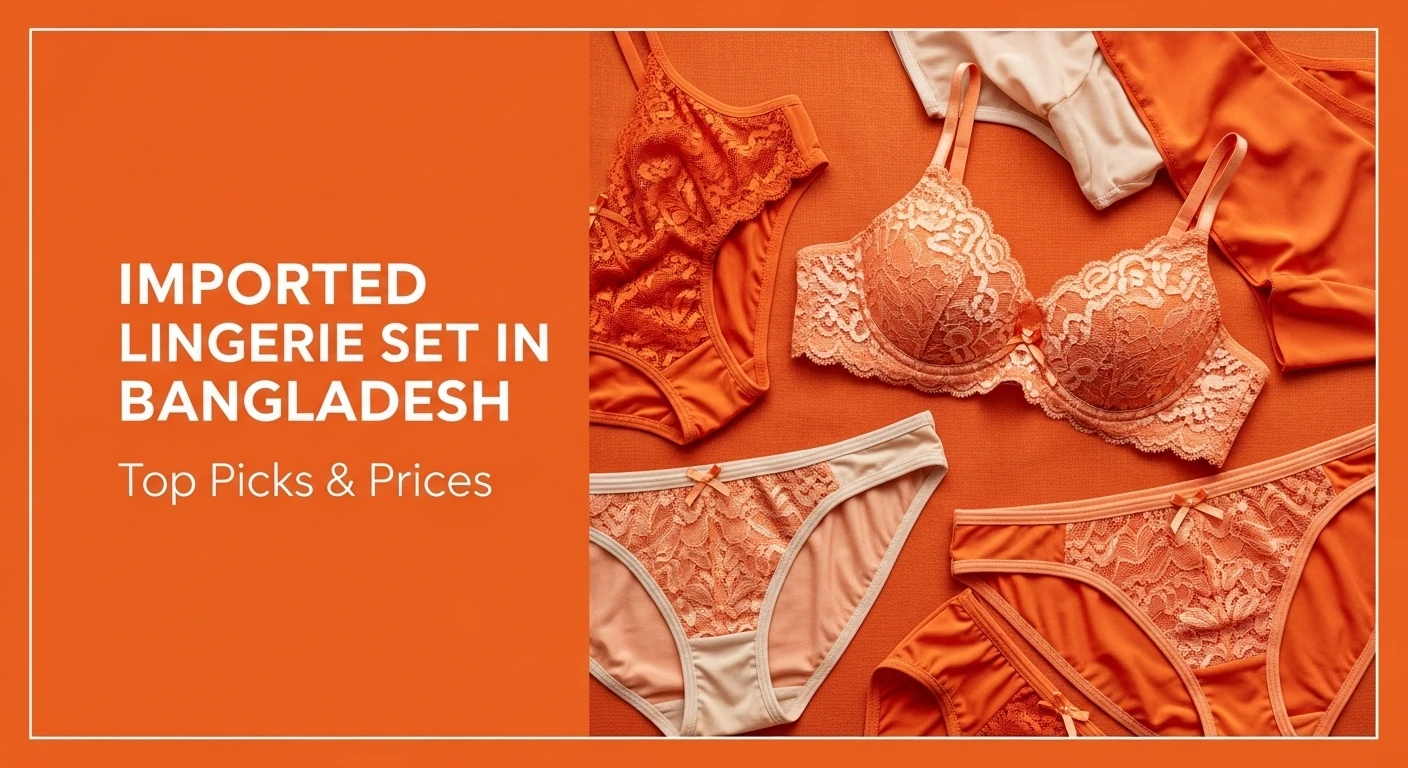
For occasion and romantic lingerie: Synthetic fabrics — specifically soft stretch lace with a cotton or modal lining, satin, and chiffon — are the right choice for occasion sets, bridal lingerie, and romantic evenings. The aesthetic properties of these fabrics — lace's visual intricacy, satin's lustre, chiffon's flow — are the purpose of the piece, and synthetic fabrics achieve them best. The key is ensuring the cotton or modal lining is present wherever the fabric contacts intimate skin.
For bra sets worn in a cool, air-conditioned office: The breathability advantage of cotton is reduced in a well-air-conditioned environment. A comfortable microfibre set is a reasonable everyday choice for air-conditioned office wear, with the caveat that the underwear's gusset should still be cotton-lined.
For sports bras and active wear: Performance synthetic blends — specifically nylon or polyester with at least 20% elastane — are the right choice for sports bras. These fabrics manage moisture during exercise better than cotton, maintain their shape under the physical stress of movement, and dry quickly. Cotton absorbs moisture and becomes heavy and uncomfortable during active use.
The Summary Verdict
For daily use in Bangladesh specifically — factoring in the climate, the health considerations for intimate areas, and the practical demands of everyday wear — the honest verdict is as follows.
Cotton wins for everyday underwear. The breathability, skin health, and hygiene advantages of cotton for the piece of clothing worn closest to the most sensitive skin are decisive. A cotton brief or hipster with a cotton gusset is the right choice for daily wear in Bangladesh's climate.
For bras, the answer is contextual. Seamless microfibre for fitted clothing and office invisibility. Cotton or cotton-blend for maximum daily comfort. Modal if budget allows, for the best all-round performance.
Synthetic wins for occasion lingerie. Lace, satin, chiffon, and mesh achieve aesthetic effects that cotton cannot replicate, and for pieces worn for a few hours on special occasions rather than all day every day, the breathability trade-off is acceptable — provided the intimate contact areas have cotton or modal lining.
Performance synthetic wins for sports bras. This is the one category where cotton is clearly the wrong choice.
The practical approach for most Bangladeshi women is not a binary choice between cotton and synthetic but a deliberate combination: cotton and modal for everyday underwear and warm-weather nightwear, quality microfibre for specific bra functions, and well-lined synthetic lace or satin reserved for occasion and romantic lingerie.
Browse both cotton and synthetic options across every style and price point at AliPeak. The lingerie sets collection includes sets in cotton, modal, microfibre, lace, and satin with clear product descriptions, so you can make informed choices based on the guidance in this article rather than guessing from a product image alone.
 english




 Automotive
 Gifts & Occasions
 Electronics & Computers
 Fashion & Apparel
 Beauty & Personal Care
 Home & Lifestyle
 Sports & Fitness
 Books, Movies & Music
 Baby & Kids