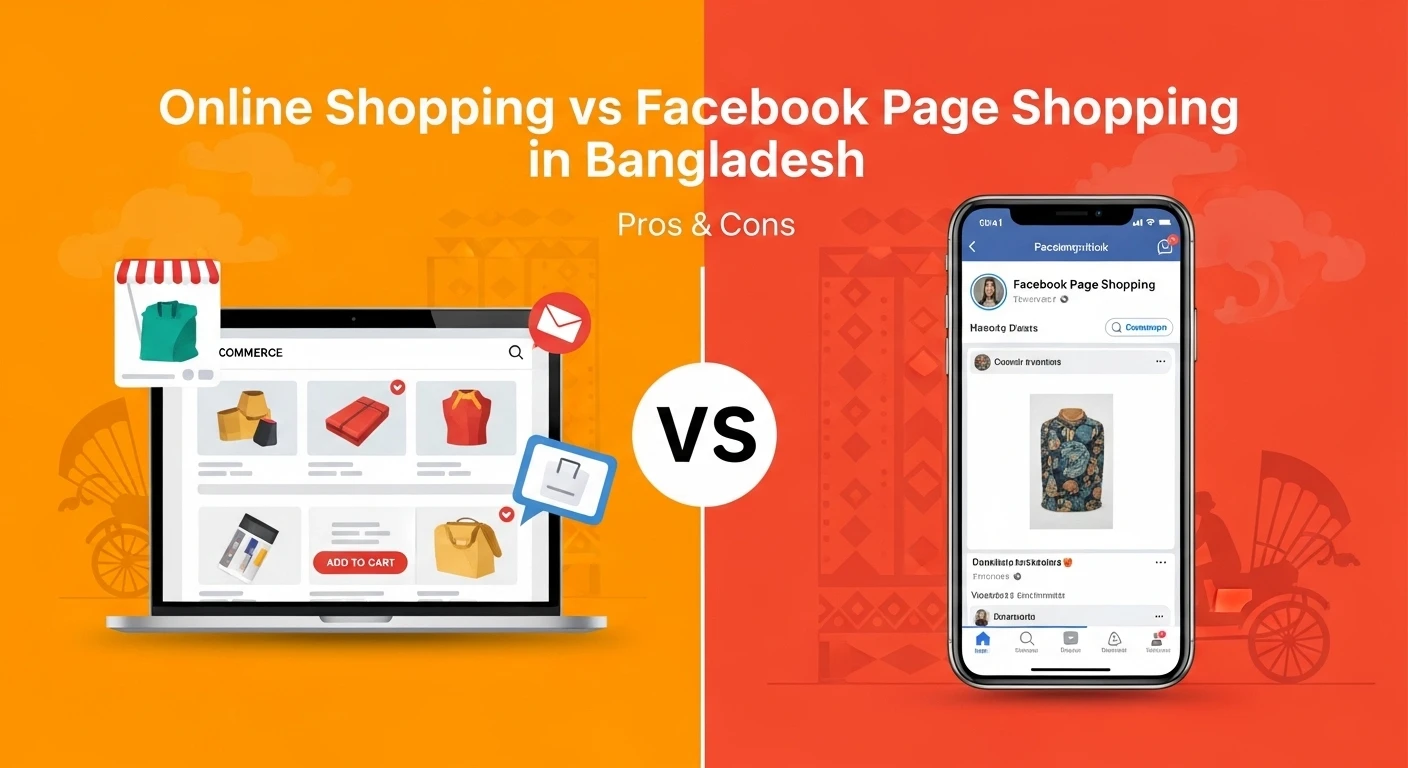
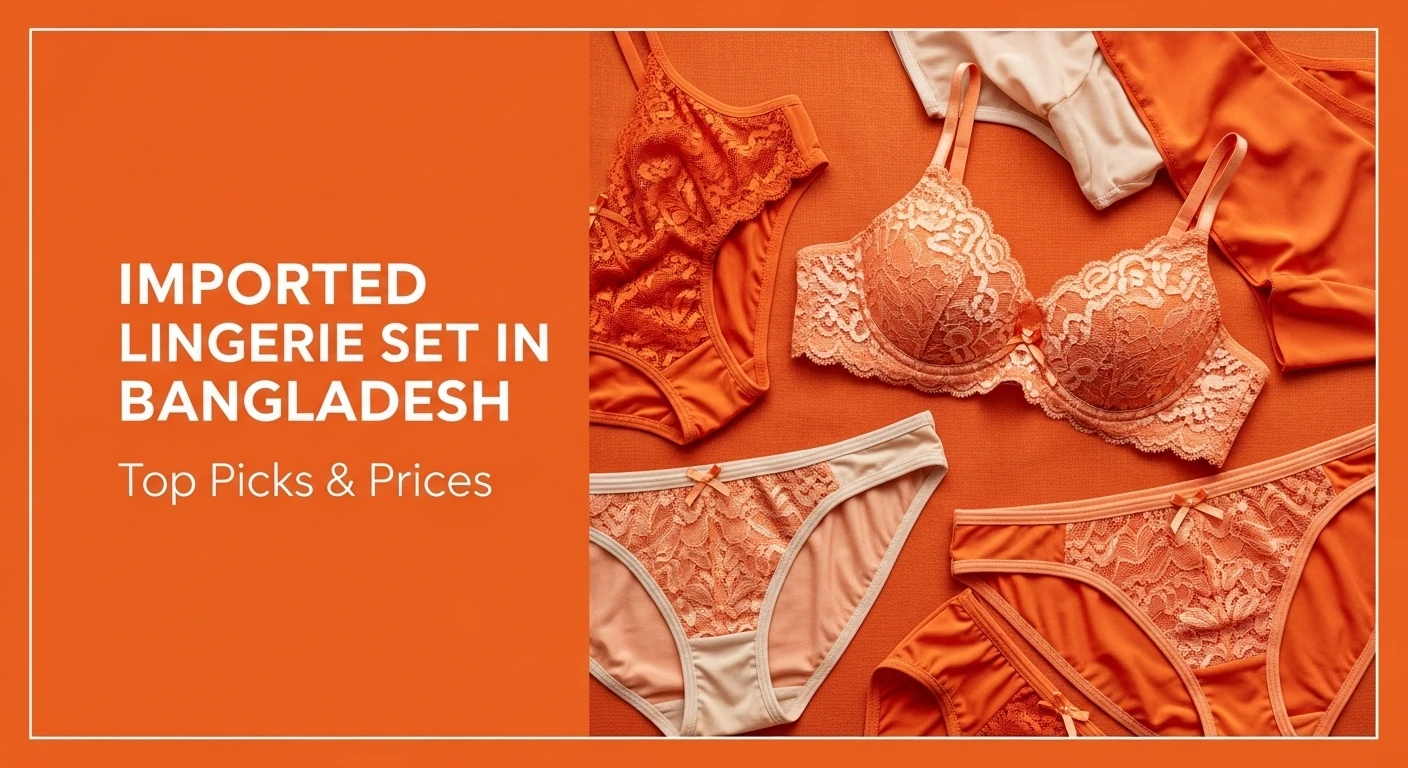
If you have shopped for clothing or lingerie online in Bangladesh, you have almost certainly encountered both. On one side: dedicated e-commerce platforms — websites and apps where you browse a catalogue, add to cart, pay, and wait for delivery. On the other side: Facebook pages — individual sellers or small businesses posting product photos in a Facebook feed, taking orders through comments or inbox messages, and coordinating delivery through personal arrangements.
Both are genuinely popular in Bangladesh. Both have real buyers who swear by them. And both have real problems that their most enthusiastic supporters tend to downplay.
Facebook page shopping in Bangladesh is not a marginal phenomenon. It is, by volume of transactions and by sheer number of sellers, one of the largest retail channels in the country for women's fashion and lingerie. Small businesses that could never build or afford a proper e-commerce platform reach customers across Bangladesh through a Facebook page and a bKash number. The scale of this ecosystem is significant and its role in making fashion products accessible to women across Bangladesh — including in areas underserved by formal retail — is genuine.
But Facebook page shopping also has specific, well-documented problems. And formal e-commerce platforms, while more structured and more reliable, have their own limitations that Facebook page sellers sometimes fill better.
This guide gives you the complete, honest comparison — what each channel does well, what each does poorly, and how to navigate both safely as a Bangladeshi online shopper.
You can shop with the security and reliability of a formal e-commerce platform at AliPeak for women's fashion, lingerie, and nightwear including the lingerie sets collection with delivery across Bangladesh.
Understanding the Two Models
Formal e-commerce platforms: A dedicated website or app — AliPeak, Daraz, Chaldal, Shajgoj, and similar — where the platform itself manages the shopping experience. Products are listed in a structured catalogue with descriptions, photos, prices, and size information. You add items to a cart, go through a checkout process, choose a payment method, and receive order confirmation. The platform manages delivery, handles returns and exchanges, and provides customer service infrastructure.
The platform is the intermediary between you and the seller. Even on marketplace platforms where individual sellers list products, the platform sets rules, provides dispute resolution, and takes responsibility for the overall shopping experience.
Facebook page shopping: A business or individual posts product photos on a Facebook page — sometimes a dedicated business page, sometimes a personal profile used for selling. Interested buyers comment on the post ("inbox please," "price?", "interested") or send a direct message to the page. Price, availability, size, and delivery are negotiated through the conversation. Payment is typically via bKash, Nagad, or other mobile banking sent directly to the seller. Delivery is arranged through courier services or in-person exchange.
There is no formal platform intermediary. The transaction is entirely between you and the individual seller, managed through Facebook's messaging infrastructure. The platform (Facebook) takes no responsibility for the transaction and provides no buyer protection.
What Facebook Page Shopping Does Well
Access to unique, handmade, and small-batch products: The most compelling argument for Facebook page shopping is the range of products available that simply do not exist on formal platforms. Independent designers, small-batch producers, artisans making handmade or custom pieces, and micro-businesses sourcing unusual items from specific suppliers — these sellers often have no formal e-commerce presence and are only findable through Facebook.
For buyers looking for something distinctive — a custom-embroidered blouse, a handmade piece with local craft elements, a design that is not in mass production — Facebook page sellers often have what formal platforms do not.
Lower prices on some categories: Without the overhead of maintaining a formal platform — no platform listing fees, no formal fulfilment infrastructure, no customer service department — some Facebook sellers pass cost savings on to buyers. For buyers who know what they want and are willing to do the research to find trustworthy sellers, prices on some categories can be lower than equivalent formal platform listings.
Direct seller communication: Buying through a Facebook page means communicating directly with the person who sells and sometimes makes the product. For items where specific questions matter — exact measurements of a specific piece, custom sizing, specific fabric queries — direct seller communication can be faster and more informative than the customer service of a large platform. Some buyers strongly prefer this personal interaction.
Discovery and community: Facebook's social infrastructure — shares, comments, group recommendations — creates a discovery mechanism for fashion products that formal platform search and browse do not replicate. Finding a new seller through a shared post in a women's fashion group, or seeing a product recommended by a trusted community member, is a different and sometimes better discovery experience than search-based browsing on a formal platform.
Local and regional availability: In areas of Bangladesh where formal e-commerce delivery is slow or unreliable, Facebook page sellers sometimes operate more locally — accepting in-person exchange in a specific city or neighbourhood, using local courier services with faster timelines, or offering flexible pickup options. For buyers outside major cities, this local operational flexibility can be genuinely valuable.
The Problems With Facebook Page Shopping
These are not minor inconveniences. They are structural problems with the model that create real risks for buyers.
No buyer protection whatsoever: This is the most serious problem and it cannot be overstated. When you send money to a Facebook page seller via bKash and the item never arrives, Facebook cannot help you. bKash can investigate but has limited ability to reverse a payment that was voluntarily sent. The seller can block you, delete their page, and disappear with no accountability. There is no dispute resolution process, no buyer protection fund, and no formal recourse.
The problem is not hypothetical — fraud through Facebook page shopping is one of the most commonly reported forms of online consumer fraud in Bangladesh. The combination of advance payment through mobile banking and the anonymity available to page operators creates an environment where scammers operate regularly. This does not mean every Facebook page seller is fraudulent — the vast majority are not — but the structural absence of buyer protection means that when fraud does occur, victims have almost no recourse.
Product photos are not quality guarantees: Facebook page sellers overwhelmingly use high-quality promotional photos — often sourced from the original manufacturer or wholesaler — that may not accurately represent the actual product the buyer receives. The disconnect between the photo that generated the sale and the product that arrives in the package is one of the most consistently reported frustrations of Facebook page shopping in Bangladesh.
On a formal platform, review systems and seller accountability create incentives for honest representation. On a Facebook page, a seller who consistently delivers products different from their photos faces no formal consequence — they simply do not get repeat orders from disappointed buyers, but can always attract new ones.
Sizing information is often inadequate: Facebook page sellers frequently post product photos with minimal or no sizing information. Interested buyers ask about size in comments or messages, and the response is often a generic S/M/L without measurements. For lingerie and fitted clothing where sizing accuracy is critical to usability, this is a significant practical limitation. Receiving the wrong size from a Facebook seller, with no formal return process, is a frustrating dead end.
No formal return or exchange process: When a formal platform delivers the wrong size, there is a return and exchange process — clear steps, defined timeframes, platform-managed resolution. When a Facebook page seller delivers the wrong size, there is a personal negotiation with an individual seller who has already received your money and has no formal obligation to take the item back. Some Facebook sellers are genuinely honest and will exchange willingly. Others are not, and the buyer has no leverage.
Payment security is lower: Paying a Facebook page seller means sending mobile banking money directly to an individual's personal account — often with no order confirmation, no transaction reference, and no paper trail beyond the transaction message in your banking app. If the seller sends the wrong item or nothing at all, recovering the payment is significantly harder than disputing a transaction with a formal platform.
No consistent seller accountability: On a formal platform, a seller who receives consistently poor reviews faces consequences — reduced visibility, account suspension, or removal. On Facebook, a page with a history of fraud can simply delete negative comments, create a new page under a slightly different name, and continue operating. The seller accountability mechanisms of formal platforms simply do not exist on Facebook.
Delivery is untracked and informal: Most Facebook page sellers use informal or semi-formal courier arrangements. Tracking — the ability to see where your package is in transit — is often unavailable. Delivery timelines are approximations at best. If an item is lost in transit, the resolution path is a conversation between you and the individual seller, not a formal claim through a platform's logistics system.
What Formal E-Commerce Platforms Do Well
Buyer protection and dispute resolution: When something goes wrong on a formal platform — wrong item delivered, item not delivered, significant quality difference from listing — there is a process. You contact customer service, raise a dispute, and the platform manages resolution. The platform has financial incentives to resolve disputes fairly because its reputation depends on buyer trust. This infrastructure does not guarantee a perfect outcome in every case, but it is meaningfully better than no process at all.
Reliable product representation: Formal platforms have reputational incentives to ensure product listings accurately represent what is delivered. Sellers on marketplace platforms face review systems that penalise inaccurate representation. Curated platforms manage their listings directly. Neither is perfect, but both are more reliable than the unregulated photo-to-product comparison on Facebook pages.
Structured sizing and product information: Good formal platforms provide size charts, garment measurements, fabric composition, and care information as standard elements of product listings. This information is the basis of an informed purchase decision for lingerie and fitted clothing. The absence of this information on most Facebook page listings is a practical barrier to buying confidently.
Tracked delivery: Formal platform deliveries through professional logistics networks are tracked — you can see where your package is and when to expect it. This transparency reduces anxiety for the buyer and creates accountability in the delivery process that informal courier arrangements do not.
Secure payment processing: Payments on formal platforms go through regulated payment gateways, with transaction records, buyer protections, and dispute pathways. The payment infrastructure of formal platforms is meaningfully more secure than direct mobile banking transfers to individuals.
Consistent experience across purchases: Once you have had a good experience on a formal platform — know the sizing runs accurately, know delivery is reliable, know customer service is responsive — you can shop with confidence in subsequent purchases. The experience is repeatable and predictable in a way that individual Facebook seller experiences are not.
The Limitations of Formal E-Commerce Platforms
Less unique product range: Formal platforms carry what sells at volume. Handmade, custom, small-batch, and artisan products — the categories where Facebook page sellers genuinely excel — are underrepresented on formal platforms. Buyers looking for something distinctive that is not in mainstream production will often find better options on Facebook than on formal platforms.
Sometimes higher prices: The overhead of operating a formal platform — technology, fulfilment, customer service — is reflected in prices. Some categories are meaningfully cheaper from Facebook sellers who do not carry this overhead. For price-sensitive buyers who have developed the skill to identify trustworthy Facebook sellers, the cost difference can be a genuine reason to buy outside formal platforms.
Customer service can be impersonal: The direct, personal communication of a Facebook page transaction is sometimes a genuinely better experience than submitting a ticket to a formal platform's customer service system and waiting for a standardised response. For buyers who value direct human communication about their purchase, formal platforms can feel less personal.
Discovery limitations: Search and browse on formal platforms is structured around catalogue categories and keywords. The serendipitous discovery of a remarkable new seller or a unique product through a social feed or a community recommendation is a different and sometimes superior discovery experience that formal platforms have not replicated.
How to Shop Safely on Facebook Pages
Given that Facebook page shopping carries real risks but genuine benefits, here is the framework for navigating it safely.
Never pay before delivery for a first purchase from any seller. Request COD or in-person exchange for the first purchase with any Facebook seller you have not used before. A legitimate seller who has nothing to hide will accommodate this. A seller who insists on advance payment for a first order from a new customer is a higher-risk proposition.
Check the page's history before buying. How long has the page existed? Pages created recently with no history, few followers, and sudden high-volume product posting are higher-risk than pages with years of history, consistent posting, and genuine customer interaction in the comments.
Read the comments critically. Look for genuine buyer feedback in post comments — specific mentions of product quality, delivery accuracy, and transaction honesty. Be sceptical of pages where negative comments are missing entirely (they may be deleted) or where all comments look uniform and suspiciously positive. Genuine customer comments mention specific details.
Ask for a video of the actual item before paying. A seller with physical stock of the item you are buying can send a short video of the actual piece — confirming the colour, fabric, and condition match the listing photo. A seller who cannot or will not do this may be reselling dropshipped items without physical possession of the stock.
Search the seller's name and page name. Bangladeshi consumer communities on Facebook — buyer warning groups, women's shopping groups — maintain shared lists of known fraudulent sellers. Searching a seller's name before paying takes two minutes and can prevent a significant loss.
Keep all transaction records. Screenshot the product listing post, the conversation agreeing the price and item, and the bKash or Nagad transaction confirmation. These records are the only documentation you have if something goes wrong.
Accept the risk premium: If you buy from Facebook page sellers, accept that you are operating without formal buyer protection and size your purchases accordingly. Buying a ৳300 item from a Facebook seller you are uncertain about is a manageable risk. Sending ৳3,000 to an unverified page for a premium set is a different level of risk that formal platform shopping eliminates.
The Verdict: Using Both Channels Intelligently
The experienced Bangladeshi online shopper does not choose exclusively between formal platforms and Facebook page shopping. She uses each where it delivers the most value and applies appropriate caution for each channel's specific risks.
Use formal platforms like AliPeak for: Items where sizing accuracy is critical — lingerie, fitted clothing, items where the wrong size is genuinely unusable. Purchases above ৳500 where buyer protection has meaningful financial value. Repeat purchases where platform reliability has been established. Time-sensitive purchases where tracked delivery and reliable timelines matter. Any purchase where you want a formal exchange or return process to be available.
Use Facebook page sellers for: Genuinely unique, handmade, or small-batch products not available on formal platforms. Lower-value exploratory purchases from sellers you are evaluating for trustworthiness. Products from sellers recommended by trusted community members or with a long, verifiable history. Categories where direct seller communication about product specifics is genuinely valuable.
Apply COD or in-person payment to all Facebook purchases from new sellers, regardless of how compelling the product looks. Pay digitally on formal platforms where cashback offers and buyer protection make it the better choice.
The Bangladeshi online shopping landscape rewards buyers who understand both channels clearly — who know what each does well, what each does poorly, and how to use each appropriately for different purchasing situations. Browse the full range of women's fashion and lingerie on AliPeak including the lingerie sets collection — a formal platform with the structure, buyer protection, and sizing information that makes lingerie and intimate wear shopping specifically a more reliable experience than Facebook page buying in this category.
 english




 Automotive
 Gifts & Occasions
 Electronics & Computers
 Fashion & Apparel
 Beauty & Personal Care
 Home & Lifestyle
 Sports & Fitness
 Books, Movies & Music
 Baby & Kids