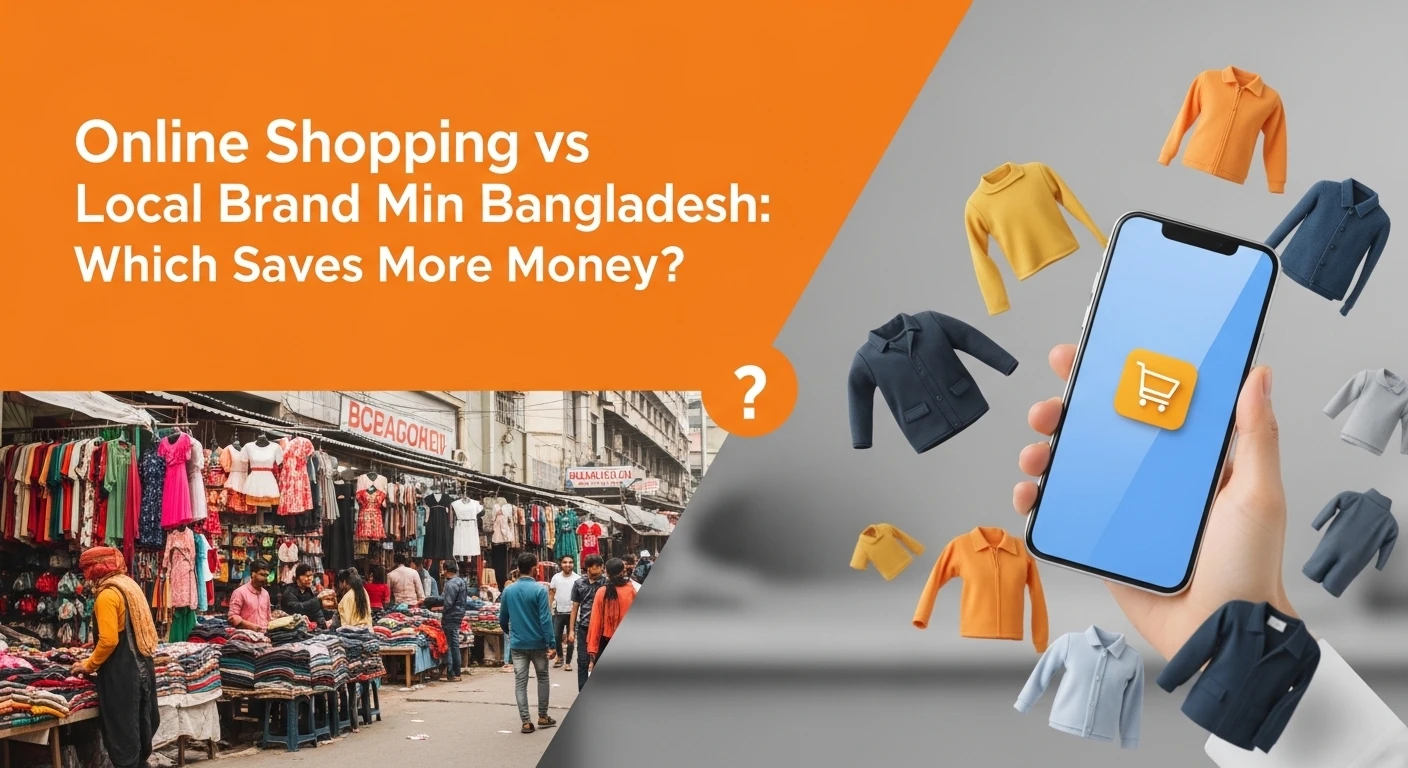
This is one of the most practically important questions for Bangladeshi women who buy clothing, lingerie, and nightwear regularly. The local market — New Market, Bashundhara City, Mirpur's Bazar, neighbourhood boutiques, the fabric and readymade sections of upazila-level markets across the country — is where most Bangladeshis have always shopped. Online shopping is newer, growing fast, and widely used, but the question of whether it actually saves money compared to the physical market is one most people have an opinion on but few have examined carefully.
The honest answer is that neither channel is cheaper across the board. The real answer is more specific and more useful: each is cheaper for certain types of purchases, in certain situations, with certain approaches. Understanding which is cheaper for what — and why — is what gives you practical control over your clothing and lingerie spending.
This guide works through the comparison carefully, category by category and situation by situation, to give you the most accurate and useful answer possible for Bangladeshi buyers specifically.
Browse a curated range of women's lingerie, nightwear, and fashion with competitive pricing and delivery across Bangladesh at AliPeak, including the lingerie sets collection.
The Factors That Determine Price in Each Channel
Before comparing prices directly, understanding what drives prices in each channel gives you the framework for predicting which will be cheaper in any specific situation.
Local market price drivers:
Rent and overhead: Physical stores in major Bangladeshi markets — Bashundhara City, New Market — pay significant rent. These costs are passed to buyers in the product price. Smaller local markets and neighbourhood shops pay lower rents, which allows lower prices on equivalent products.
Middlemen: Physical retail typically involves a supply chain — manufacturer to wholesaler to retailer to buyer. Each intermediary takes a margin. The more steps between manufacturer and buyer, the higher the final price.
Negotiation: Local market prices in Bangladesh are often negotiable, particularly in bazaar settings. The marked price is frequently not the final price, and buyers who negotiate well — or who know the market rates — often pay significantly less than tourists and unfamiliar buyers.
Bulk and relationship pricing: Regular buyers in local markets often develop relationships with specific sellers and receive better prices than first-time buyers. Volume purchases — buying three or four pieces from the same seller — also typically unlock better per-unit pricing.
Online platform price drivers:
Technology and fulfilment overhead: Online platforms pay for website and app development, server infrastructure, payment processing, and warehousing and fulfilment. These costs are reflected in pricing, though they are often lower per-unit than physical retail overhead.
Delivery costs: Every online purchase includes a delivery cost — paid explicitly by the buyer, absorbed by the platform, or built into the product price. This cost has no equivalent in local market shopping where you carry the item home yourself.
No negotiation: Online prices are typically fixed. The listed price is the price. There is no equivalent of the local market negotiation that can reduce the effective price by 10% to 30%.
Promotional pricing and cashback: Online platforms run regular promotional events — Ramadan sales, Eid sales, 11.11 events — where prices drop significantly. They also offer cashback through bKash and Nagad that effectively reduces the purchase price. These mechanisms have no direct equivalent in local market shopping.
Competition and comparison: Online shopping allows instantaneous price comparison across multiple sellers and platforms. The competitive pressure of visible price comparison drives online prices toward market efficiency. In a physical market, the effort required to comparison shop across multiple stalls or shops limits competitive pressure.
Category by Category: Which Is Cheaper
Everyday cotton briefs and basic underwear:
Local market advantage in most cases. Basic cotton briefs from local Bangladeshi manufacturers are widely available in neighbourhood markets and bazaars at ৳60 to ৳150 per piece, often lower in bulk. These are among the most price-competitive items in physical retail because they are manufactured locally, the supply chain is short, and competition among sellers is intense.
Online equivalents start from similar prices but with delivery costs added. A ৳80 brief with ৳60 delivery costs ৳140 — more than the local market price for an equivalent piece. The advantage shifts for online when buying multiple items in a single order that shares delivery cost, or during cashback promotions that effectively reduce the price.
Verdict: Local market is cheaper for small quantities. Online becomes competitive for larger orders or during promotions.
Bras — everyday and T-shirt bras:
More nuanced than basic underwear. In major city markets like Bashundhara City and New Market Dhaka, a wide range of bras is available across price tiers. An everyday underwire bra in a mainstream size runs ৳350 to ৳800 in a mid-tier market store.
Online pricing for equivalent bras is often similar or slightly lower, without delivery. With delivery, it depends on the order size. The key online advantage in this category is size range — women outside the most common size range (34B to 36C in most physical stores) find significantly better availability online than in most physical markets.
For women in mainstream sizes, local market and online pricing are broadly comparable. For women in less common sizes, online is often the only option with adequate availability, making the price comparison secondary.
Verdict: Broadly comparable for mainstream sizes. Online is significantly better for extended sizing.
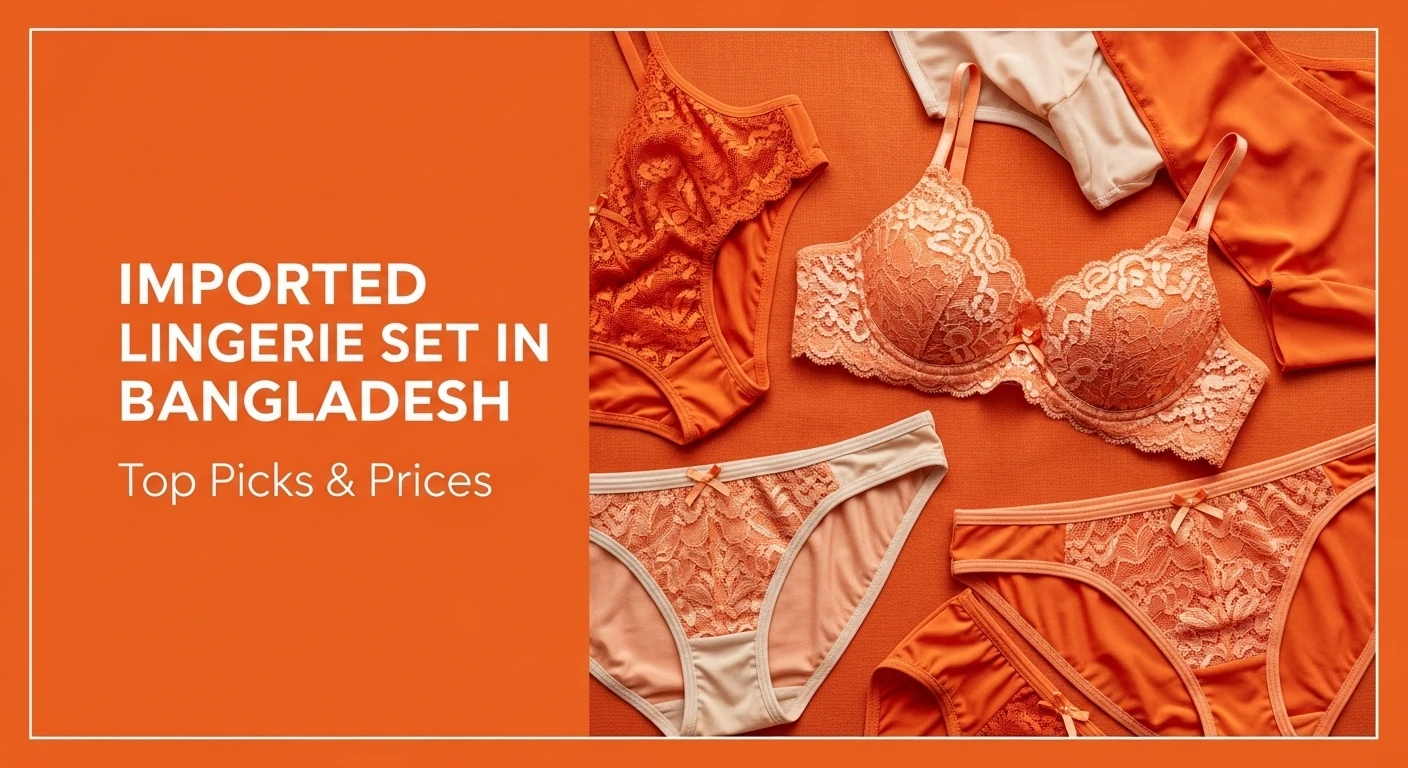
Matching lingerie sets (lace, occasion, bridal):
Online advantage in most cases. Quality matching lace sets — the kind used for special occasions, honeymoons, and bridal trousseaux — are available in physical markets but the range is limited and the quality-to-price ratio is often worse than online. Physical market sellers of these items carry limited stock, often in a narrow size range, and prices for import-quality lace sets in physical stores are frequently higher than equivalent online prices because of physical retail overhead.
Online platforms carry a wider range of styles, fabrics, and sizes with clearer product information (fabric composition, measurements) that makes quality assessment easier. During promotional events, online prices for mid-range lace sets can be 20% to 40% lower than equivalent physical retail prices.
Verdict: Online is generally better — wider range, comparable or lower prices, better information.
Cotton and modal nightwear (everyday nighties, pyjama sets):
Mixed result. Bangladesh produces quality cotton nightwear domestically and it is widely available in physical markets at competitive prices. A decent cotton nighty in a local market runs ৳250 to ৳500 for mid-range quality — competitive with online pricing before delivery costs are added.
The online advantage here is again range — styles, lengths, colours, and sizes available online are significantly wider than what most physical markets carry. For specific styles or sizes, online is better. For standard styles in common sizes, local market prices are competitive and no delivery cost applies.
Verdict: Local market is price-competitive for standard styles. Online is better for range and specific requirements.
Premium nightwear (satin, modal, babydolls):
Online advantage. Premium nightwear — satin sets, modal robes, fine chiffon babydolls — is less consistently available in physical markets outside major city centres, and where available, the range is limited. Import-quality premium nightwear in physical stores in Dhaka carries overhead costs that push prices higher than online equivalents.
For buyers outside Dhaka and major cities, quality premium nightwear may simply not be available locally at all, making online the only channel regardless of price.
Verdict: Online is better for availability, range, and often price.
Sports bras:
Online advantage. Performance sports bras — particularly high-impact designs for running and aerobics — are poorly represented in most Bangladeshi physical markets. General clothing markets carry basic cotton bras and some basic sports bras, but the engineered performance fabrics and designs needed for proper sports support are primarily available through online channels or specialist sportswear stores in major cities.
Verdict: Online is significantly better for quality and availability.
Nursing bras:
Online advantage, clearly. Dedicated nursing bras with proper one-handed clip mechanisms are rarely stocked in general physical markets in Bangladesh. This is a specialist item that is primarily an online purchase category.
Verdict: Online only for meaningful selection.
The Hidden Costs of Each Channel
A fair comparison must include the full cost of a purchase, not just the sticker price.
Hidden costs of local market shopping:
Transportation: Getting to the market costs money. A return rickshaw or CNG fare in Dhaka for a shopping trip to New Market or Bashundhara City runs ৳100 to ৳400 depending on distance. This cost is real and adds to every local market purchase. For women travelling from outer Dhaka or from districts outside the city, transport costs are significantly higher.
Time: A full local market shopping trip in Bangladesh takes two to four hours minimum — travelling, finding parking or getting down from transport, navigating crowded markets, visiting multiple stores, negotiating prices, and returning. Time has economic value. A shopping trip that takes three hours for a single bra purchase has a time cost that the item's price does not reflect.
The negotiation skill gap: Local market prices in Bangladesh assume negotiation. Buyers who do not negotiate — who pay the first price asked — consistently overpay compared to buyers who know market rates and negotiate effectively. The price advantage of local markets is partly an experienced-buyer advantage that newer or less confident buyers do not fully access.
Exhaustion and impulse buying: Physical market shopping in Bangladesh — particularly in major urban markets — is a physically and cognitively demanding experience. The crowd, the noise, and the energy required create conditions where impulse purchases happen. Buyers often leave physical markets with items they did not intend to buy, purchased because they were in the moment and the item was in front of them. These unplanned purchases are a real cost of physical market shopping.
Limited return options: Most local market sellers in Bangladesh do not accept returns. "Bikroy hoyey gele phirt newa hoy na" — no returns after sale — is the standard policy. If an item does not fit when you try it at home, or if you find a defect you did not notice in the market, the item is yours. This no-return policy means that every wrong-size or quality-compromise purchase in a local market is an unrecoverable cost.
Hidden costs of online shopping:
Delivery costs: Explicit and real. ৳60 to ৳120 for delivery to most locations in Bangladesh, potentially higher for remote areas. This cost applies to every order and must be included in the price comparison.
Returns and exchanges: If an item needs to be exchanged, there may be return shipping costs and a delay of several days or more. This is a real cost when it occurs.
The waiting period: Online shopping requires waiting for delivery — typically two to five days for major cities, longer for rural areas. If you need something immediately, local market shopping is the only option.
Wrong-size risk without trying: Without the ability to try before buying, wrong-size purchases are more common online than in physical markets where tailors can advise or items can be tried informally. This risk is manageable with good measurement practices but is a real cost when it occurs.
The Total Cost Comparison: A Worked Example
Consider a Bangladeshi woman in Dhaka buying a mid-range matching bra and brief set, quality cotton nighty, and three everyday briefs.
Local market option: Matching set: ৳700 (negotiated from ৳850 asking price) Cotton nighty: ৳400 Three briefs: ৳250 (৳80-85 each, small discount for multiple) Transport (return CNG to New Market): ৳200 Time cost (3 hour trip): significant but hard to quantify Total cash outlay: ৳1,550 Total with estimated time cost: meaningfully higher
Online option (AliPeak, single order): Matching set: ৳750 Cotton nighty: ৳450 Three briefs: ৳270 Delivery (single order, all items): ৳80 bKash cashback 8% on ৳1,470 product value: -৳118 Total cash outlay: ৳1,432 Time cost (30 minutes browsing and ordering): minimal
In this example, online shopping is marginally cheaper in cash terms and significantly cheaper in time and effort. The cashback is the decisive factor — without it, local market and online are very close. With it, online wins.
The comparison shifts in the local market's favour when the buyer is an experienced negotiator who gets significantly below the asking price, when transport costs are very low (the market is walking distance), and when no delivery fee applies or the order does not reach a free-delivery threshold.
When Local Market Is Clearly Better
When you need something immediately: Online shopping requires waiting. If you need a bra for tomorrow morning, local market is the only option.
When fit requires trying before buying: For women who have irregular sizing, who are between standard sizes, or who have specific fit requirements — an unusual torso length, asymmetric sizing — trying items in person before buying is genuinely valuable. Local markets do not offer fitting rooms in most cases, but the ability to hold a garment against your body and assess proportions in person is more informative than a size chart comparison.
When you are buying very small quantities at low price points: Single basic briefs or small items where delivery cost is proportionally large relative to the item cost are more economical locally if the market is accessible.
When you are an experienced negotiator in a competitive market: A buyer who knows the fair price, negotiates confidently, and can get 20% to 30% below the asking price in a competitive local market captures the local market's theoretical price advantage that many buyers never fully access.
When you need tailoring or customisation: Local markets with tailors attached — common in Bangladesh — allow immediate customisation, alterations, or made-to-measure work that online shopping cannot offer.
When Online Shopping Is Clearly Better
When you need a specific size outside the mainstream range: Larger band sizes, larger cup sizes, smaller cup sizes, extended waist and hip sizes — online selection is consistently better for women outside the most commonly stocked local market sizes.
When you want a specific style, fabric, or colour: Local markets carry what sells in volume. Online platforms carry broader ranges. For anything specific or unusual, online wins on availability.
When you are outside a major city: For women in smaller districts and rural areas, local market options for lingerie and nightwear are often very limited. The nearest quality market may be hours away. Online shopping's reach across Bangladesh — including to areas where physical retail is sparse — is one of its most genuinely transformative advantages.
When you are buying during a cashback promotional period: Eid sales, Ramadan promotions, and platform-specific events with 10% to 20% cashback make online prices clearly lower than local market equivalents. Timing purchases to capture these periods is a meaningful saving.
When you value return and exchange options: For any purchase where fit uncertainty exists, the formal exchange process of a platform like AliPeak is a genuine advantage over the no-return policy of most local market sellers.
When privacy matters: For lingerie purchases specifically, the privacy of online shopping — browsing, ordering, and receiving at home without exposure — is genuinely valued by many Bangladeshi women and is not available in local market shopping.
The Honest Summary
For simple everyday basics in standard sizes, accessible to local markets, bought in small quantities — local market is competitive and often marginally cheaper when transport costs are low and the buyer negotiates well.
For specific styles and sizes, for women outside major cities, for purchases during promotional periods, for categories with poor local availability (nursing bras, sports bras, premium nightwear), and for any buyer who values convenience, range, and return options over absolute minimum price — online shopping is better on both price and practical grounds.
For most Bangladeshi women's lingerie and nightwear needs specifically — where size range, fabric information, and the ability to exchange matter significantly — online shopping via established platforms represents better overall value than local market shopping even when the absolute unit prices are close, because the total cost of wrong-size local market purchases with no return option is often higher than the total cost of a carefully chosen online purchase with an exchange process.
The best approach for most buyers: use local markets for items you can evaluate confidently in person, for immediate needs, and for relationship-based negotiated pricing when you have that access. Use online platforms like AliPeak for specific items, extended sizing, premium categories, and during promotional periods when cashback makes online clearly the more economical choice.
Browse the full range of women's lingerie, nightwear, and fashion at AliPeak — with the range, sizing information, and exchange processes that make online shopping specifically for intimate wear the more reliable and often the more economical choice for women across Bangladesh.
 english




 Automotive
 Gifts & Occasions
 Electronics & Computers
 Fashion & Apparel
 Beauty & Personal Care
 Home & Lifestyle
 Sports & Fitness
 Books, Movies & Music
 Baby & Kids