Yoga is one of the fastest growing fitness activities among women in Bangladesh. Whether practiced at a studio in Dhanmondi or Gulshan, at home with an online instructor, or in a community class, more Bangladeshi women are rolling out their mats every year. With that growth comes the question that applies to every physical activity: what do I actually need to wear?
For yoga specifically, the sports bra you choose matters more than most people initially expect. Yoga is not a high-impact activity — there is no running, no jumping, no sudden jarring movement — but it involves a wide range of positions, stretches, inversions, and held poses that place specific demands on what you wear. A bra that is fine for sitting or standing is often completely inadequate for a downward dog, a forward fold, a twisted side stretch, or a wheel pose.
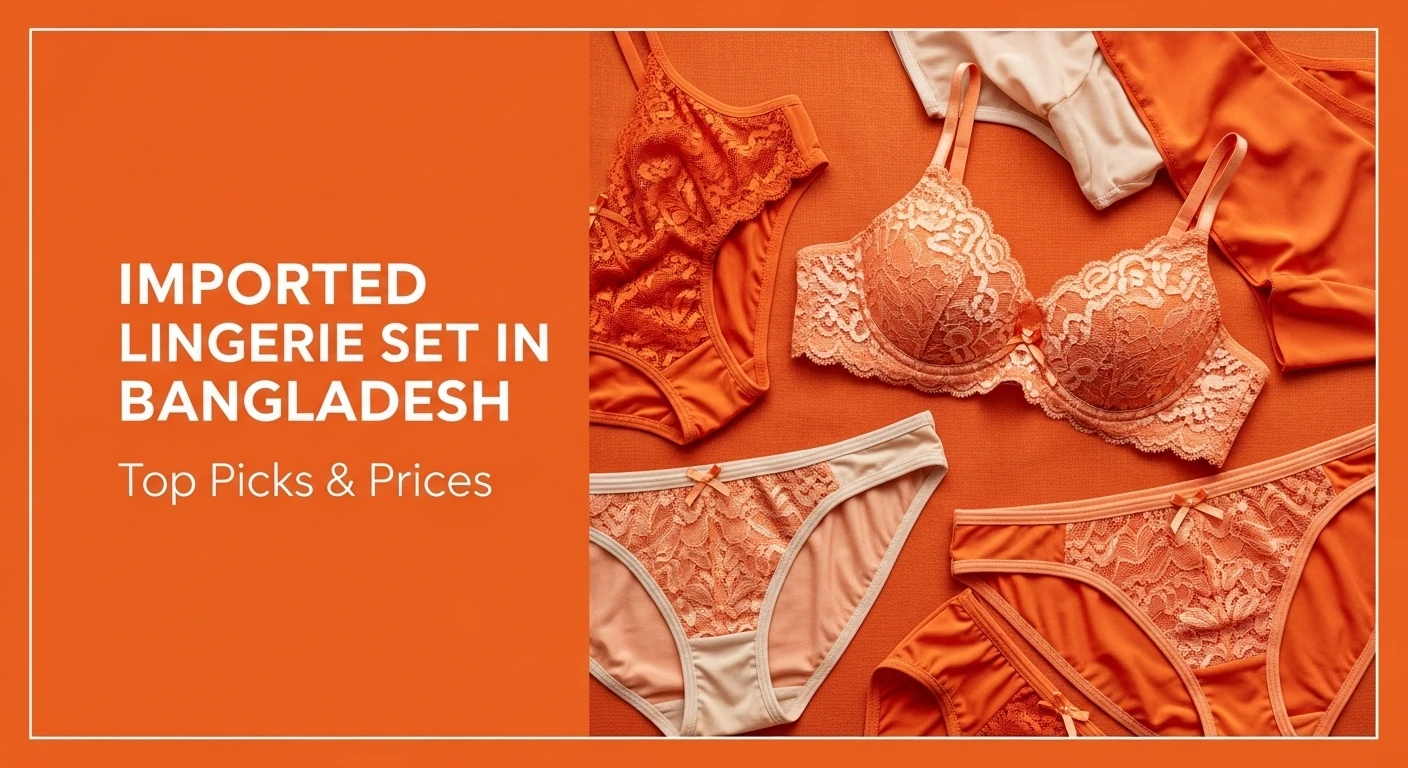
This guide explains exactly what makes a sports bra suitable for yoga, which features to look for and which to avoid, how sizing works, which fabrics perform best in Bangladesh's climate, and where to find good options. You can browse women's active and lingerie styles at AliPeak including a range of options in the lingerie sets collection with delivery across Bangladesh.
Why Yoga Has Specific Sports Bra Requirements
Before looking at what to buy, it helps to understand why yoga is a distinct category that requires its own thinking rather than simply wearing any sports bra.
The range of motion is exceptional. Yoga involves more extreme stretching, twisting, and bending than almost any other fitness activity. Your arms go above your head, your torso folds forward to touch your toes, your spine twists from side to side, your legs open into wide splits. A sports bra that stays in place during a brisk walk or a gym circuit may shift, ride up, or fail to contain breast tissue during the more extreme positions of a yoga session.
Many poses are inverted or horizontal. In downward dog, crow pose, forward fold, and lying back bends, your body is either inverted, horizontal, or at unusual angles. In these positions, gravity acts on breast tissue differently than it does when you are upright. A bra that provides adequate support when you are standing may allow significant movement or displacement when you are folded forward or upside down.
Yoga classes are long. A typical yoga session runs 45 to 90 minutes. This extended wear time means that minor discomforts — a seam that digs slightly, a band that rides up a little, straps that rub — become major discomforts by the end of the session. The bra must be genuinely comfortable throughout, not just acceptably tolerable at the start.
Yoga is done in a studio or class setting. Unlike running alone outside, yoga is practiced in a group setting or in front of a mirror. How the bra looks, whether it stays in position during movement, and whether it is comfortable to the point of being mentally unobtrusive all matter in this context.
Yoga is a low to medium-impact activity. This is an important fact that affects which type of sports bra is appropriate. Unlike running (high impact) or aerobics (high impact), yoga does not involve the repetitive up-and-down movement that causes significant breast movement. The support requirement is lower in terms of impact management, but higher in terms of range of motion and flexibility. This distinction means that high-compression, very firm sports bras are often not the best choice for yoga — they restrict movement and can be uncomfortable in certain poses.
Low, Medium, and High Impact: Where Yoga Sits
Sports bras are generally categorised by impact level, and matching the bra to the activity's impact level is fundamental to both comfort and function.
High-impact sports bras are designed for running, HIIT training, aerobics, and jumping activities. They use firm compression, often encapsulation of individual cups, and rigid construction to minimise breast movement. They are excellent for their intended purpose but can be restrictive and uncomfortable for the wide range of motion required in yoga. The firm compression can make deep forward folds or inversions where the chest is compressed against the thighs genuinely uncomfortable.
Medium-impact sports bras are designed for cycling, dance, brisk walking, and moderate gym work. They balance support with comfort and flexibility. This is the most appropriate impact category for most yoga styles practiced in Bangladesh — including Hatha yoga, Vinyasa flow, Yin yoga, and most general yoga classes.
Low-impact sports bras are designed for pilates, stretching, light walking, and very gentle movement. They provide minimal compression and focus primarily on comfort and coverage. Appropriate for gentle, restorative, or beginners' yoga but insufficient for more active Vinyasa or Power yoga styles.
The yoga exception: Hot yoga and Power yoga, practiced in heated studios or involving more vigorous sequences, sit between medium and high impact in terms of physical demand. For these more intensive styles, the upper end of medium-impact or a flexible high-impact bra is more appropriate than a standard medium-impact design.
For the majority of Bangladeshi women practicing general yoga — whether Hatha, Vinyasa, or a standard studio class — a medium-impact sports bra that prioritises range of motion and comfort alongside adequate support is the target.
Key Features to Look For in a Yoga Sports Bra
These are the specific features that distinguish a sports bra that works well for yoga from one that technically qualifies as a sports bra but fails in a yoga context.
Flexibility over maximum compression: A yoga sports bra needs to move with your body rather than resist movement. Look for sports bras described as flexible, stretchy, or designed for low to medium impact activities. Avoid bras described as maximum compression or high-impact only if yoga is your primary activity.
Racerback or cross-back strap design: Racerback straps (which form a Y shape at the back rather than sitting at the outer edge of the shoulder) allow greater freedom of movement for the shoulder blades. In poses that involve arm extension, twisting, or weight-bearing through the arms — such as plank, downward dog, or warrior sequences — racerback straps stay in position and do not restrict shoulder movement the way traditional wide-set straps sometimes can. Cross-back designs provide similar benefits.
Wide underband: A wide, firm underband (the band that sits below the cups at the ribcage) distributes support across a larger surface area, which is both more comfortable for extended wear and more effective at maintaining position during inversions and forward folds.
Flat seams or seamless construction: Yoga involves sustained contact between the bra and skin in a range of positions. Any raised seam that touches the skin will eventually cause irritation during a long session. Look specifically for flat seam construction or seamless sports bras. This feature is described in product listings and is worth seeking out deliberately.
Moderate to full coverage cups: In inverted poses, the cups need to contain breast tissue regardless of gravity's changed direction. Minimal-coverage or push-up style sports bras that rely on forward positioning to contain the bust will fail in downward dog or forward fold. A more contained, moderately full coverage cup stays functional in all positions.
No underwire: Underwire and yoga are genuinely incompatible. The rigid structure of an underwire bra restricts the flexibility of the ribcage, which is actively engaged in yoga breathing practices. Deep pranayama (breath control) and the natural expansion of the ribcage during many yoga poses are inhibited by underwire. Always choose a wire-free sports bra for yoga.
Moisture-wicking fabric: Yoga generates sustained perspiration, particularly in Bangladesh's warm climate and in any studio without strong air conditioning. A moisture-wicking fabric draws sweat away from the skin and allows it to evaporate, keeping the skin drier and reducing irritation. Look for sports bras with fabrics described as moisture-wicking, quick-dry, or performance fabric.
Adequate strap security: Straps that fall off the shoulder during movement are a major distraction in yoga. Look for straps that are either fixed in a racerback configuration (which cannot fall off) or have some grip to them — smooth satin-type straps tend to migrate off the shoulder more than textured or wider straps.
Built-in padding (optional but useful): Light removable padding in a yoga sports bra provides a layer of coverage modesty that many women prefer in a class setting. It is not necessary for support in a low-impact activity, but it provides confidence, particularly in lighter-coloured sports bras under studio lighting. Removable pads are preferable to sewn-in padding because they can be removed for comfort or washing.
Strap Styles and Their Yoga Suitability
The back strap configuration of a sports bra significantly affects its suitability for yoga. Here is a breakdown of common strap styles and how they perform.
Racerback: The Y-shaped back where straps meet between the shoulder blades. Excellent for yoga — allows full shoulder rotation and stays in position in all poses. The most recommended strap style for yoga sports bras.
Crossed back straps: Two straps that cross between the shoulder blades in an X pattern. Similar freedom of movement to racerback. Popular in stylish yoga-wear designs and performs well across most yoga poses.
Wide straps with standard back: Straps that sit at the outer edge of each shoulder and attach separately to the band at the back. Acceptable for yoga but more prone to falling off the shoulder during poses involving arm extension or lateral stretching. If buying this style, ensure the straps have enough width and texture to stay in place.
Thin spaghetti straps: Narrow decorative straps. Not appropriate for any yoga practice beyond the most gentle lying stretches. Thin straps cut into the shoulder during any load-bearing pose and migrate out of position constantly.
Zip-front closure: Some sports bras have a zip at the front rather than pulling over the head. Easy to put on and take off, but the zip hardware can be uncomfortable in certain yoga positions where the chest is compressed, such as prone backbends or lying poses. Check that the zip lies flat and does not protrude.
Fabrics for Yoga Sports Bras in Bangladesh's Climate
Bangladesh's warm and humid climate makes fabric choice more important for sports bras than it is in cooler countries. An extended yoga session generates significant perspiration, and a fabric that does not manage moisture well will feel uncomfortably wet, cause skin irritation, and potentially cause the bra to shift position as wet fabric loses its grip against the skin.
Nylon-spandex blend: The best performing fabric combination for yoga in warm conditions. Nylon is naturally moisture-wicking and quick-drying while spandex (elastane) provides the four-way stretch needed for yoga's range of motion. Most quality sports bras at mid-range and above use this combination. Look for at least 80% nylon or similar performance fibre with 20% spandex.
Polyester-spandex blend: The most common fabric combination in sports bras at all price points. Polyester wicks moisture adequately and dries reasonably quickly. Performs well in moderate conditions but slightly less comfortable than nylon in sustained high-heat sweating. A very serviceable choice, especially at mid-range price points.
Cotton-spandex blend: Cotton is comfortable against the skin but it absorbs moisture rather than wicking it away. A cotton sports bra becomes progressively heavier and wetter as a yoga session continues. In Bangladesh's heat, this means a noticeably uncomfortable experience by the second half of a session. Avoid pure cotton or high-cotton-content sports bras for active yoga practice.
Bamboo or modal blends: These plant-based fabrics are softer than synthetic alternatives and have some natural moisture-wicking properties. Better than cotton for yoga but generally not as performance-optimised as nylon or polyester blends. A reasonable choice for gentle or restorative yoga where sweating is minimal.
Mesh panels: Many yoga sports bras incorporate mesh panels at the back or sides for ventilation. This is a very useful feature for Bangladesh's climate — mesh allows air circulation in the areas most prone to heat buildup during yoga. Back mesh in particular helps significantly with comfort during extended sessions.
The ideal fabric profile for a yoga sports bra in Bangladesh: primary fabric of nylon or polyester-spandex blend with at least 20% spandex for stretch, and mesh panels at the back for ventilation.
Sizing Guide for Yoga Sports Bras
Yoga sports bras are sold in two different sizing systems and understanding which system a particular bra uses is important.
Letter sizing (S/M/L/XL/XXL): Most sports bras at budget and mid-range price points in Bangladesh use this system. Sizes correspond roughly to bust and underbust measurements. For yoga sports bras specifically, where comfort and flexibility are priorities over precise structural support, the fit tolerance is wider than for a regular underwire bra and letter sizing is generally adequate if sized correctly.
A useful guide for letter sizing in sports bras: Small generally fits bust 30 to 33 inches, underbust 26 to 29 inches. Medium generally fits bust 33 to 36 inches, underbust 29 to 32 inches. Large generally fits bust 36 to 39 inches, underbust 32 to 35 inches. XL generally fits bust 39 to 42 inches, underbust 35 to 38 inches. XXL generally fits bust 42 to 45 inches, underbust 38 to 41 inches.
Band and cup sizing (32B, 34C, etc.): Premium and imported sports bras often use cup sizing. This gives more precision and is particularly valuable for women with larger cup sizes (C and above) who need the cup to contain breast tissue in inversions and wide-stretch poses.
Fit check for yoga sports bras: Put the bra on and raise both arms above your head. The band should not ride up. The straps should not slip off your shoulders. Now fold forward at the waist until your upper body is parallel to the floor — a forward fold approximating standing uttanasana. The cups should contain your breast tissue fully in this position without spillage or displacement. If the cups fail this test, the sports bra is not suitable for yoga regardless of how it feels upright.
The common sizing mistake for yoga: Many women buy sports bras that are slightly too tight in the band, assuming firmer is better for exercise. For yoga, a band that is overly tight restricts ribcage expansion during breathing exercises. The band should be firm enough to stay in position but not so tight that it creates a visible ridge in the skin or inhibits a full deep breath.
Price Guide: Yoga Sports Bras in Bangladesh
Budget range — ৳200 to ৳500
Entry-level sports bras in this range are typically made from basic polyester-spandex or cotton-spandex blends in letter sizing. Construction is simple — usually a pull-over style with a wide band and basic cups or compression panel. For gentle or beginner yoga at home, these can be adequate.
The main limitations are fabric that does not wick moisture as effectively as performance fabrics, basic construction without flat seams or mesh ventilation, and sizing that is imprecise. For sustained yoga practice, particularly in a class setting or during warmer months, the comfort limitations become apparent by the middle of the session.
Mid-range — ৳500 to ৳1,200
This is the most appropriate tier for women who practice yoga regularly. Mid-range yoga sports bras in Bangladesh feature better fabric — typically polyester-spandex or nylon-spandex blends with genuine moisture-wicking properties — racerback or cross-back strap designs, flat seam construction, and removable padding. Band and cup construction is better shaped and more stable in extended use.
A mid-range yoga sports bra in the correct size will stay in position through a full 60 to 90-minute session, manage moisture reasonably well, and remain comfortable throughout. For regular practitioners, this tier represents the best value. Spending ৳700 to ৳1,000 on a good yoga sports bra that will last a year or more of regular use is a sound investment.
Upper mid-range — ৳1,200 to ৳2,500
At this price point, sports bras use premium performance fabrics with superior moisture management, more sophisticated construction including fully bonded seams, mesh ventilation panels, and better elastic that maintains its tension through many wash cycles. Cup shaping is more precise and remains effective in a full range of yoga positions. These are the bras designed specifically for athletic use by serious practitioners.
Premium — ৳2,500 and above
Imported performance sports bras from specialist athletic brands. These feature the highest-quality fabrics, the most sophisticated construction, and the longest lifespan with proper care. For women who practice yoga daily or near-daily, the per-wear cost justification is strong.
How to Care for Your Yoga Sports Bra
Sports bras absorb significant sweat and require more frequent washing than regular bras. Proper care extends their life considerably.
Wash your sports bra after every yoga session. Allowing sweat to dry in the fabric without washing degrades the elastic fibres and elastic casing over time, causes odour that becomes permanent, and can cause skin irritation on subsequent wears.
Hand wash in cool water with mild detergent, or machine wash on a gentle cold cycle in a lingerie bag. The lingerie bag prevents the bra from tangling with other items and protects delicate strap constructions.
Never use fabric softener on performance sports bra fabrics. Fabric softener coats the fibres of moisture-wicking fabrics and blocks their ability to wick moisture — permanently reducing the performance benefit you paid for.
Dry by hanging or laying flat in a shaded, well-ventilated area. Never tumble dry — heat degrades spandex fibres and causes them to lose their stretch permanently. A sports bra that has been tumble-dried repeatedly will noticeably lose its firmness and shape retention.
Rinse sports bras immediately after wearing if you cannot wash them right away. A quick cool rinse removes most of the sweat before it can degrade the fabric, and keeps the bra fresh until you have time for a full wash.
Replace your yoga sports bra when the band no longer snaps back firmly against your hand when stretched, when the cups have lost their shape, or when the moisture-wicking fabric has visibly thinned or become rough. A sports bra that has lost its elasticity no longer provides adequate support regardless of how it looks.
Common Mistakes When Buying a Yoga Sports Bra
Choosing maximum compression for yoga. High-compression sports bras designed for running restrict the ribcage in breathing exercises and are uncomfortable in many yoga poses. Medium impact with flexibility is the correct specification for yoga.
Buying an underwire sports bra. Underwire and yoga are incompatible. The rigid structure inhibits breathing and movement. Wire-free is non-negotiable for yoga.
Prioritising looks over function. Yoga wear has become a fashion category as well as a performance category. Beautiful sports bras with elaborate strap detailing are widely available — but straps with complex decorative crossings can dig into the skin in poses where you lie or rest weight on the back. Test for comfort in multiple positions, not just upright.
Not testing the bra in a forward fold. The most important fit test for a yoga sports bra — does it contain your breast tissue when you are folded forward? — is never done at the point of purchase or even on first try-on. Always do this test at home before committing to the bra as your yoga wear.
Buying cotton-rich fabrics for hot yoga. Cotton absorbs moisture and does not release it. In any sustained yoga practice in Bangladesh's warm climate, a cotton sports bra will be noticeably wet and heavy within 20 minutes. Performance fabric is not optional for active yoga.
Not accounting for the frequency of washing. A sports bra used for yoga requires washing after every session. If you practice three times a week, you need at least two sports bras in rotation — one being worn and one being washed and dried. Buying only one sports bra for regular yoga practice means wearing a wet or incompletely dry bra repeatedly, which is both unhygienic and accelerates fabric degradation.
Building a Simple Yoga Lingerie Wardrobe
For women who practice yoga regularly, having two to three good sports bras in rotation is both more practical and more economical than owning one expensive bra and washing it after every session.
Two to three medium-impact sports bras in racerback or cross-back styles in breathable nylon or polyester-spandex, sized correctly for your measurements, is all you need. Rotate them so each one is washed, fully dried, and rested between sessions. This simple rotation approach significantly extends the lifespan of each bra and ensures you always have a fresh, functional option available for your practice.
For active wear beyond yoga — gym sessions, brisk walking, cycling — keep one higher-impact sports bra for those activities and use your yoga sports bras only for yoga and similar low to medium-impact activities. Using the right support level for the right activity extends both the life of the bras and the comfort of the activity.
Browse women's active wear and lingerie options at AliPeak to find sports bras and supportive styles across different price points. The lingerie sets collection and wider women's clothing range on the platform cover a variety of comfortable and active wear options with nationwide delivery across Bangladesh.
Yoga rewards showing up consistently. The right sports bra makes showing up more comfortable, more confident, and more focused on the practice itself rather than on adjusting what you are wearing. That is worth getting right.
 english




 Automotive
 Gifts & Occasions
 Electronics & Computers
 Fashion & Apparel
 Beauty & Personal Care
 Home & Lifestyle
 Sports & Fitness
 Books, Movies & Music
 Baby & Kids