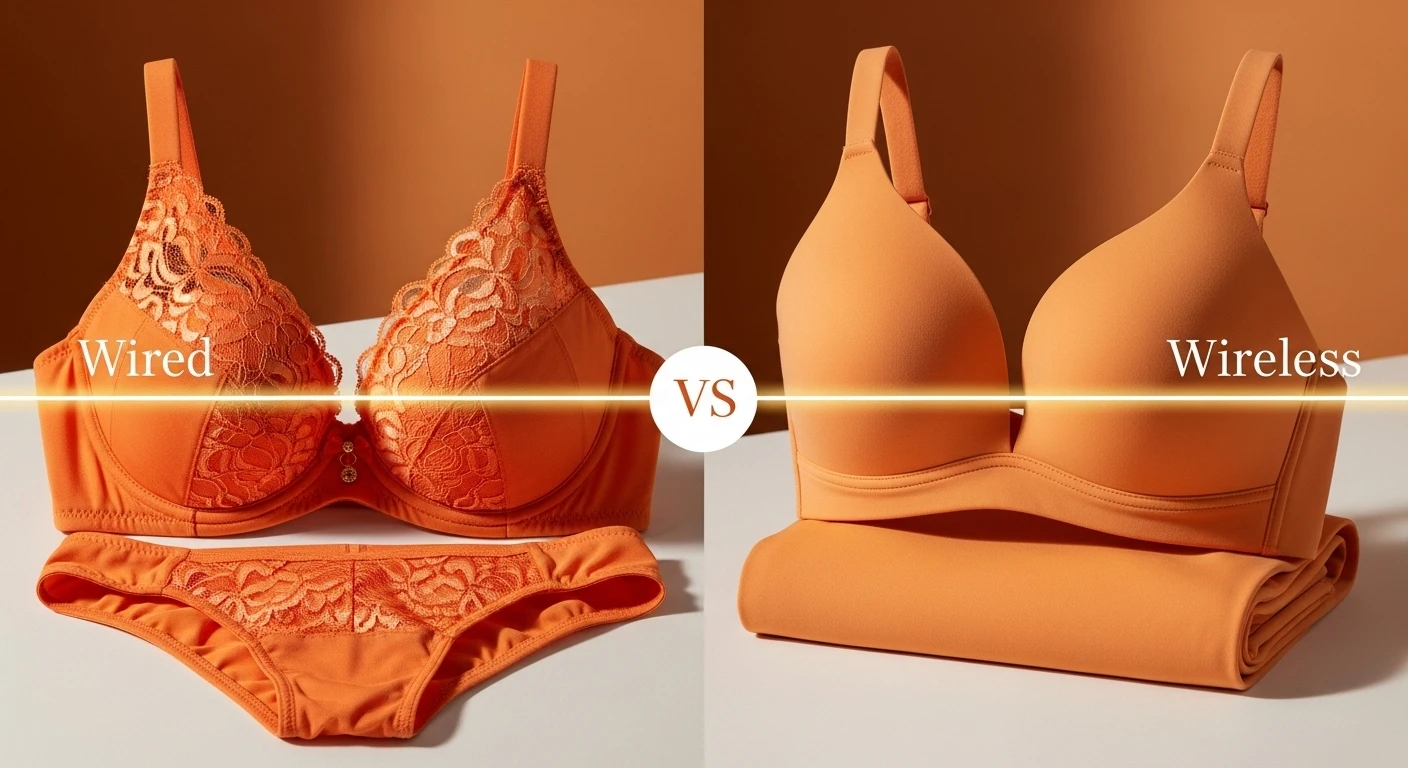
An honest, detailed comparison of underwired and wireless bras — covering support, comfort, fit, occasion, and which option is right for your specific needs.
The wired versus wireless bra debate is one of the most genuinely contested questions in lingerie — and one where the answer depends far more on individual factors than most generic advice acknowledges. The lingerie industry spent decades insisting that underwired bras were the gold standard for support, fit, and shape. Then came a significant cultural and commercial shift toward wireless styles, and suddenly the message reversed — wireless was liberating, comfortable, and just as supportive.
Both positions overstate their case. The reality is more useful: underwired and wireless bras each do specific things well, suit specific body types and cup sizes better, and work for specific occasions and garments in ways the other does not. Understanding these differences — rather than accepting either camp's blanket claims — is what leads to a genuinely good bra wardrobe.
For Bangladeshi women specifically, the question has additional dimensions: the climate, the garment styles most commonly worn, the specific body proportions most common across Bangladesh, and the practical realities of bra care in a humid tropical environment all affect which style works best. This guide addresses all of it.
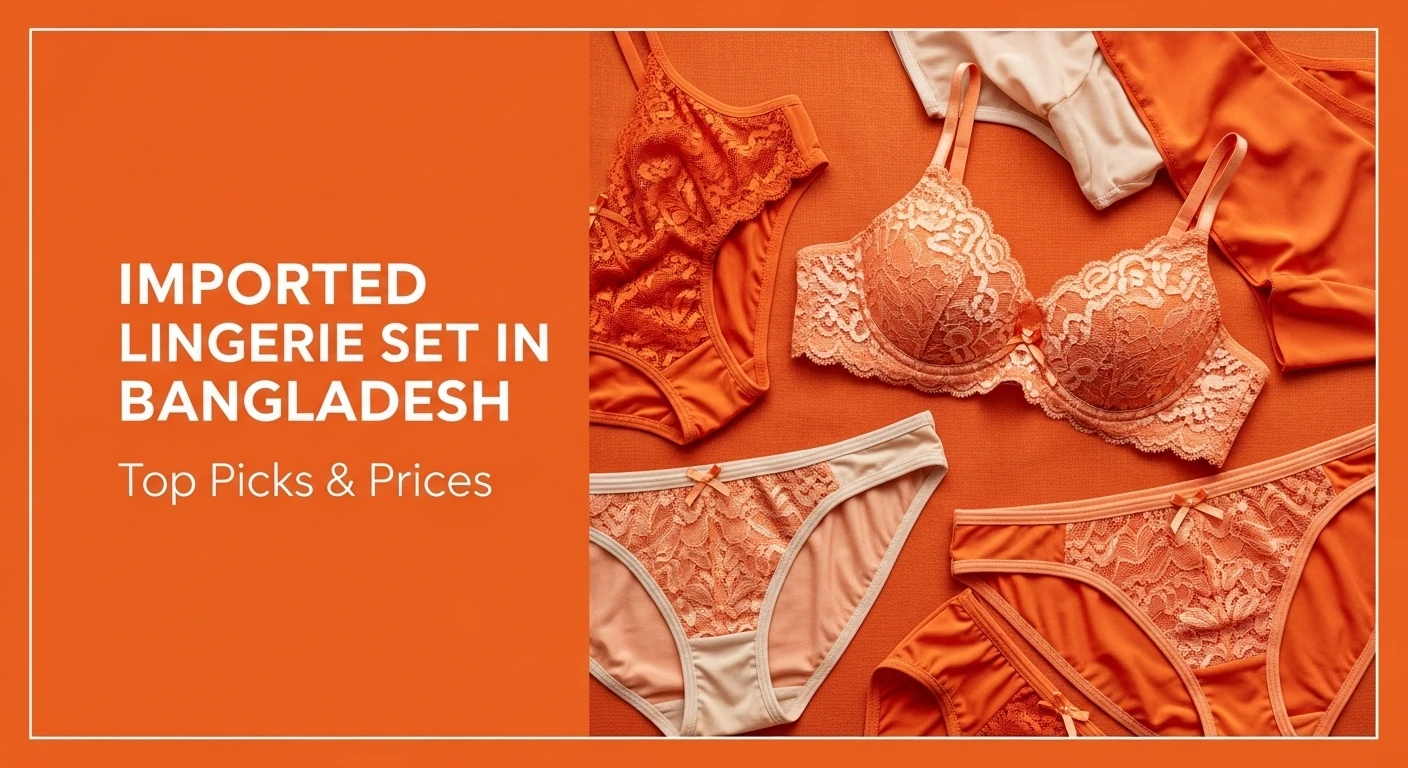
To browse both underwired and wireless bra sets across all styles, explore the Alipeak lingerie collection — one of Bangladesh's most comprehensive online lingerie destinations.
What Exactly Is the Difference?
Before comparing, let us be precise about what each style actually is.
The Underwired Bra
An underwired bra contains a thin, curved wire — typically made from steel, although nylon and plastic versions exist — that runs beneath each cup in a channel of fabric. The wire follows the natural curve of the breast base, sitting against the ribcage completely and encircling the breast tissue.
The wire serves two structural functions: it defines the cup shape by providing a rigid base that maintains the cup's structure throughout the day, and it helps anchor the bra to the ribcage, preventing the cups from shifting or riding up.
Underwired bras are available in every style — t-shirt bras, push-up bras, plunge bras, strapless bras, sports-influenced styles, lace occasion sets, and bridal collections. The underwire is a construction element that works across the full range of bra styles.
The Wireless Bra
A wireless bra achieves its shape and support entirely through fabric construction — typically through stretch fabric with varying degrees of structure, seaming, padding, and elastication — without a wire at the breast base.
Wireless bras range from entirely unstructured bralettes (essentially a soft stretch fabric top) through to heavily engineered wireless designs with molded foam cups, internal structure, and sophisticated fabric layering that provides meaningful lift and support without any wire.
The range within wireless is wide enough that "wireless bra" covers both the barely-there bralette and the heavily structured wireless T-shirt bra — styles with very different support levels and wearing experiences.
Round 1: Support and Lift
This is where the two styles diverge most significantly — and where cup size makes the most important difference.
For Smaller Cup Sizes (AA to B)
For smaller cup sizes, the support question is largely irrelevant as a practical matter. A smaller breast requires less structural support to remain comfortable and in position throughout the day. A well-made wireless bralette or a lightly padded wireless bra provides entirely adequate support for an AA to B cup — and does so with significantly more comfort than an underwired style that is often overengineered for the actual support need.
For smaller cup sizes, the wireless option is generally the better choice for everyday wear. The added comfort, softer feel against the skin, and ease of care are genuine advantages that the marginal difference in support does not outweigh.
Verdict for smaller cups: Wireless wins for everyday comfort.
For Medium Cup Sizes (C to D)
The C to D cup range is where the choice becomes genuinely contested. A high-quality wireless bra with proper construction — molded cups, well-engineered band, internal structure — can provide excellent support for a C to D cup throughout a normal day. But the quality of construction matters more here than it does for smaller cups. A cheap or poorly made wireless bra in C or D will fail to support adequately, causing discomfort and the forward-and-downward migration of breast tissue that creates the "unsupported" look under clothing.
An underwired bra in the correct size provides reliable, consistent support for C and D cups with less dependence on quality of fabric construction — the wire does structural work that compensates for construction limitations.
Verdict for medium cups: High-quality wireless is competitive with underwired for everyday wear. Underwired is more reliably supportive across quality levels. Choose based on activity level and how important precise lift is for specific garments.
For Larger Cup Sizes (DD and Above)
For larger cup sizes, the underwired bra has a genuine and significant support advantage. The weight of larger breast tissue requires structural anchoring that fabric alone — in any wireless construction currently widely available — cannot fully provide for extended daily wear. Without the wire's structural base, larger cups tend to migrate forward and downward over the course of a day, creating the need for constant readjustment and causing shoulder and upper back discomfort from straps bearing excessive weight.
A properly fitted underwired bra for a larger cup size — where the wire genuinely encircles the breast base completely and sits against the ribcage throughout — provides lift, forward projection, and day-long comfort that wireless alternatives at this cup size cannot match.
The critical caveat: a poorly fitted underwired bra — where the wire sits on breast tissue rather than the ribcage — is worse than a wireless alternative. Fit is the determining factor. A well-fitted underwired bra is excellent for larger cups. A poorly fitted one is a source of real discomfort and can cause long-term tissue damage. For complete guidance on identifying correct underwire fit, see our Why Your Bra Doesn't Fit (And How to Fix It) guide.
Verdict for larger cups: Underwired is the better choice for daily wear and any activity involving movement. High-quality wireless for low-activity, relaxed-wear occasions.
Round 2: Comfort in Bangladesh's Climate
This is where the Bangladesh-specific context matters significantly — and where the answer differs from what global bra guides typically say.
Bangladesh's climate is hot and humid for the majority of the year. Average temperatures during the hot season (March–May) exceed 35°C with high humidity. Even the cooler winter months (December–January) are mild rather than genuinely cold. The result is that Bangladeshi women sweat more, more consistently, and in more intimate areas of the body than women in temperate climates.
Underwired in Bangladesh's Heat
The underwire channel — the fabric casing that holds the wire — sits directly against the skin at the ribcage and underbreast. In high heat and humidity, this contact point becomes a site of trapped perspiration, skin irritation, and chafing. Many women who never experience underwire discomfort in cooler climates develop real irritation at the wire channel during Bangladesh's summer months.
Heat also accelerates the specific failure mode of underwired bras: the wire working through the casing fabric and beginning to poke the skin. The combination of perspiration's effect on fabric and the repeated friction of the wire against a sweating body speeds this process compared to cooler, drier conditions.
Wireless in Bangladesh's Heat
Wireless bras, without the rigid wire pressing against the body in a linear channel, distribute contact pressure more evenly and allow more airflow at the underbreast. This is a meaningful comfort advantage in Bangladesh's heat for all cup sizes, but particularly for smaller to medium cups where support is not the overriding consideration.
The fabric of a wireless bra — particularly if made from breathable cotton or a moisture-wicking microfibre — can also manage perspiration significantly better than the heavily structured fabric layers common in underwired styles.
Verdict on climate comfort: Wireless has a genuine comfort advantage in Bangladesh's hot and humid conditions. For the hottest months specifically, many women who comfortably wear underwired styles in cooler conditions find wireless significantly more comfortable.
Round 3: Fit and Sizing Reliability
Underwired
When correctly fitted, an underwired bra provides the most precise and reliable fit of any bra style. The wire defines exactly where the bra sits, the cups are precisely shaped, and the structure ensures the bra stays in exactly the same position all day.
The problem is that correct underwired fit requires getting multiple dimensions right simultaneously: band size, cup size, wire width (which must match the breast base width), and cup depth. Getting any of these wrong produces discomfort. The number of women wearing incorrectly sized underwired bras — and attributing the resulting discomfort to underwired bras in general — is substantial.
Our detailed guide Why Your Bra Doesn't Fit (And How to Fix It) addresses every underwired fit problem specifically — the wire on breast tissue, the center gore floating, the cups overflowing or gaping, the band riding up. If you have concluded that underwired bras are "uncomfortable" without systematically working through these fit issues, there is a good chance you have simply been wearing the wrong size.
Wireless
Wireless bras are significantly more forgiving of sizing imprecision. The absence of a wire means there is no rigid element that sits in the wrong place if the fit is slightly off. Stretch fabric accommodates a range of body variations naturally.
This forgiving nature is also a limitation: wireless bras cannot achieve the same precision of placement and shaping that a correctly fitted underwired bra can. For garments where a precise silhouette matters — a fitted formal saree blouse, a structured dress, a close-fit formal kameez — the underwired bra's superior precision is a functional advantage.
Verdict on fit: Underwired provides superior precision when correctly fitted. Wireless is more forgiving and accessible for those whose measurements fall between standard sizes.
Round 4: Appearance Under Clothing
Under Fitted and Formal Garments
For the structured, fitted garments that are a significant part of the Bangladeshi wardrobe — form-fitting saree blouses, formal kameez, fitted office shirts, structured lehenga cholis — an underwired bra generally produces a better silhouette. The defined cup shape and precise positioning creates the smooth, rounded profile that fitted garments are designed around.
A wireless bra under a very fitted, structured garment can sometimes create a slightly less defined or slightly more natural — some would say softer — profile. Whether this is preferable depends on the garment and personal preference.
Under Casual and Relaxed Garments
For more relaxed garments — loose kameez, casual tops, blouses with some drape — the distinction matters less and the wireless bra's comfort advantage becomes relatively more important.
Under Sarees
The saree blouse deserves specific mention in the Bangladesh context. Blouse construction varies enormously — from extremely tight, tailored constructions to more relaxed fits — and the right bra depends on the blouse style.
For a very tight, fitted saree blouse that will show every contour: an underwired bra in the correct size that creates a precise rounded profile is ideal.
For a slightly looser or more relaxed blouse, or for everyday cotton saree wear: a well-made wireless bra is entirely appropriate and offers superior comfort for a day of saree wearing — which is often an extended physical experience involving movement, heat, and sustained wear.
The Push-Up Question
Push-up bras — which almost universally use underwires as the structural foundation for the lifting and shaping mechanism — occupy their own category. If you want genuine push-up lift and cleavage enhancement, underwired construction is essentially required. The wire is what makes the push-up mechanism work correctly.
For everything about push-up bra construction and what to look for, see our Best Push-Up Bra Set in Bangladesh: Top Picks guide — and understand that the push-up category is inherently the underwired category.
Round 5: Care and Longevity
Underwired
Underwired bras are the most care-sensitive bras in terms of what incorrect washing does to them. Machine washing is particularly damaging — the spin cycle bends the wires and crushes the cup structure. The wire channel fabric weakens with repeated washing and heat exposure, leading to the wire eventually working through the casing.
With correct hand washing and careful drying as described in our How to Wash Lingerie Set at Home in Bangladesh guide, underwired bras last well. The key care rules specific to underwired styles: always close hooks before washing, never machine wash, always dry hanging from the center gore rather than from straps, and never wring.
Wireless
Wireless bras are generally easier to care for than underwired styles. Without the wire, there is no wire-poking failure mode, no metal-related rust risk in high humidity (relevant in Bangladesh's monsoon season — metal wire channels can rust if not dried completely), and no cup structure that can be crushed by mechanical agitation.
For wireless bras with molded foam cups, similar care is needed to push-up styles — gentle handling of the cups during washing and flat drying to maintain cup shape.
Verdict on care: Wireless bras are more forgiving in care and generally more durable in the long-term, particularly in Bangladesh's humid conditions where complete drying of underwire channels can be challenging during monsoon season.
Round 6: Occasion Suitability
Underwired Bra: Best For
- Formal and fitted garments where silhouette precision matters
- Push-up and cleavage-enhancing effects
- Larger cup sizes (DD+) for all-day support
- High-activity days where precise positioning throughout the day matters
- Structured saree blouses and formal kameez
- Occasions and events where appearance under clothing is a priority
- Strapless styles (almost all properly supportive strapless bras are underwired)
Wireless Bra: Best For
- Everyday comfort wear, particularly in Bangladesh's hot season
- Smaller to medium cup sizes (AA–C) for daily wear
- Relaxed and casual garments where precise silhouette matters less
- Sleepwear and loungewear (wireless is the natural choice here)
- Extended wear occasions — a full day of wedding attendance, travel, festivals — where comfort over many hours is the priority
- Post-surgery or during certain health conditions where underwire pressure is inadvisable
- Women who are pregnant or nursing
Round 7: The Bralette — A Category Within Wireless
The bralette deserves specific attention as the softest and most relaxed expression of the wireless category. A bralette — unstructured, unpadded or lightly padded, with no molded cup — is distinct from an engineered wireless T-shirt bra in the level of support it provides.
What bralettes do well:
Bralettes are exceptionally comfortable, breathable, and gentle against the skin — all significant advantages in Bangladesh's climate. They are the natural choice for home wear, for lighter coverage under relaxed garments, and for women who want minimal structure for comfort reasons.
Lace bralettes paired with matching high-waist briefs are among the most beautiful everyday lingerie sets — the visual appeal of lace with none of the structural demands of a wired bra. For guidance on the best bralette and high-waist brief combinations as bridal shower gifts, see our Bridal Shower Lingerie Gift Guide Bangladesh.
What bralettes do not do well:
Bralettes provide minimal lift for larger cup sizes. They are not appropriate as the foundation for fitted, structured garments where shape and positioning matter. And they are not suitable as sports or high-activity bras — the absence of structure means breast tissue moves freely, which causes discomfort and long-term tissue stress during exercise.
The Bangladesh-Specific Verdict
Taking all seven rounds together, with specific weight given to the Bangladesh climate and wardrobe context:
Choose Underwired When:
- Your cup size is D or above and you need all-day reliable support
- You are wearing a fitted, structured garment — formal kameez, tight saree blouse, structured dress — where silhouette precision matters
- You want push-up enhancement and cleavage shaping
- It is winter or cooler weather and heat and humidity are not concerns
- You have found your correct underwire size and the wire genuinely sits against the ribcage comfortably
Choose Wireless When:
- Your cup size is AA to C and support is not the overriding concern
- It is the hot season (March–May) or monsoon season and prolonged wire contact is uncomfortable
- You are wearing relaxed garments where comfort over extended hours is more important than silhouette precision
- You are wearing lingerie as sleepwear or loungewear
- You are building a bridal trousseau piece that will be worn for intimate wear rather than under structured garments
- You prioritize ease of care and lower maintenance
The Ideal Wardrobe Has Both:
Most Bangladeshi women with varied wardrobes and lifestyles are best served by a combination — underwired bras for formal and fitted garments and occasions where shaping matters, wireless and bralette styles for everyday comfort wear, home wear, and the hottest months of the year.
The proportions of that combination depend on your specific cup size, your lifestyle, and your wardrobe. A woman who primarily wears fitted formal garments to work needs more underwired styles. A woman in smaller cup sizes who prioritizes daily comfort may find wireless covers almost all her needs.
For a complete guide to building a well-rounded lingerie wardrobe — including which styles to prioritize at each price point — see our Best Lingerie Brands in Bangladesh 2026 guide. And for brides building a complete trousseau that includes both functional and special-occasion pieces in both wired and wireless styles, our Bridal Trousseau Checklist for Bangladesh covers the full picture.
What to Look for in Each Style
Quality Indicators: Underwired Bras
- Wire width matches breast base width — the wire should encircle the breast completely, ending at the side seam, not digging into breast tissue at either end
- Wire fully enclosed in a well-padded fabric channel — no raw metal edges at the ends of the wire
- Cup lining is soft — the interior of the cup should be smooth and gentle against breast tissue
- Band is firm — two fingers fit underneath, no more
- Three or more rows of hooks — allows for fit adjustment as the band stretches with wear
- Cup construction maintains shape under gentle compression — springs back fully
Quality Indicators: Wireless Bras
- Fabric has genuine structure — not just thin stretch fabric with no internal support architecture
- Band is firm and stays horizontal — a loose, rolling band in a wireless bra provides no support regardless of cup quality
- Molded cups (for everyday wireless) — maintain their shape when not being worn
- Internal shelf or lining for modest support even in softer styles
- Cotton gusset if there is a matching brief
- Quality elastic at all edges — soft, recovery-maintaining, not cutting in
For the complete quality checklist that applies across both styles — including the construction details that separate quality from cheap — browse the curated Alipeak lingerie collection where quality standards are maintained across both underwired and wireless categories.
Common Myths, Addressed
Myth: Underwired bras cause breast cancer. This claim has been studied repeatedly and there is no credible scientific evidence linking correctly fitted underwired bras to any health condition including breast cancer. The concern stems from a debunked book published in the 1990s. A correctly fitted underwired bra that does not compress lymph nodes — meaning the wire sits against the ribcage and not on breast tissue — presents no health risk.
Myth: Wireless bras always provide less support. A well-engineered wireless bra with proper molded cups, a firm band, and quality construction provides excellent support for smaller to medium cup sizes. The range within wireless is enormous — a premium wireless T-shirt bra from a quality brand is significantly more supportive than a poorly made underwired bra.
Myth: You should always wear an underwired bra for formal occasions. The right bra for a formal occasion is the one that fits correctly and works with the specific garment. A well-made wireless bra that creates a beautiful silhouette under your formal garment is better than a poorly fitted underwired bra that causes discomfort and visible issues throughout the day.
Myth: Wireless bras are only for lazy or older women. Wireless bras are a legitimate and often superior choice for specific body types, cup sizes, activities, and climates. Choosing wireless based on considered factors rather than default is not laziness — it is appropriate decision-making.
Final Thought
The wired versus wireless question does not have a universal answer — and any guide that gives you one is oversimplifying. The honest answer is: it depends on your cup size, your climate experience, your garments, and the specific qualities you are prioritizing in each context.
What this guide should give you is the framework to answer the question for yourself — for your body, your wardrobe, and your life in Bangladesh. Take what applies to your specific situation and build a lingerie wardrobe that gives you both the support you need and the comfort you deserve.
Explore the full range of wired and wireless bra sets at Alipeak and find the styles that work for you at alipeak.com.
For more guides on lingerie fit, care, and building the right wardrobe for Bangladesh, explore the full article collection at alipeak.com.
Support guidance is based on general principles of breast biomechanics and garment construction. Individual experience varies based on specific body proportions and fit.
 english




 Automotive
 Gifts & Occasions
 Electronics & Computers
 Fashion & Apparel
 Beauty & Personal Care
 Home & Lifestyle
 Sports & Fitness
 Books, Movies & Music
 Baby & Kids