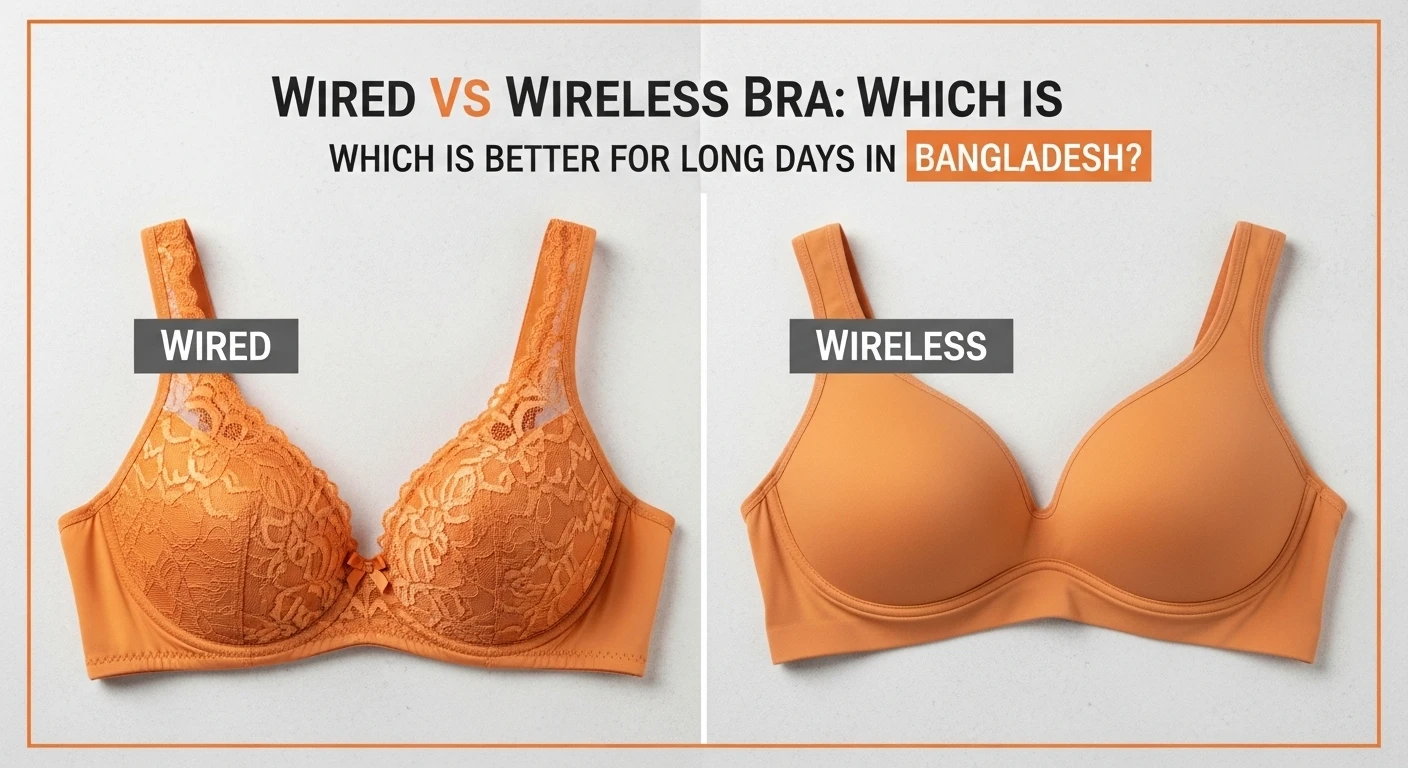
This is one of the most debated questions in lingerie, and it is one where firmly held opinions on both sides often say more about individual experience than about objective truth. Some women have worn underwire bras their entire adult lives and would not consider switching. Others made the switch to wireless years ago and describe it as one of the best decisions they ever made for their daily comfort. Both experiences are valid — and both reflect real differences in how different bra types perform for different body types, in different climates, and in different daily contexts.
For Bangladeshi women specifically, this question has particular relevance. A typical day in Bangladesh — whether you are a working woman in Dhaka, a student at university, a teacher, a homemaker managing a household — is long, physically active, and often spent in heat and humidity that makes every clothing choice more consequential than it would be in a cooler climate. A bra that is merely inconvenient in a cool, air-conditioned environment becomes genuinely uncomfortable after eight or ten hours in Bangladesh's warm, humid conditions.
This guide gives you an honest, thorough comparison of wired and wireless bras specifically for the demands of a long day in Bangladesh — covering support, comfort, health considerations, fabric, fit, and which body types and daily situations genuinely benefit from each.
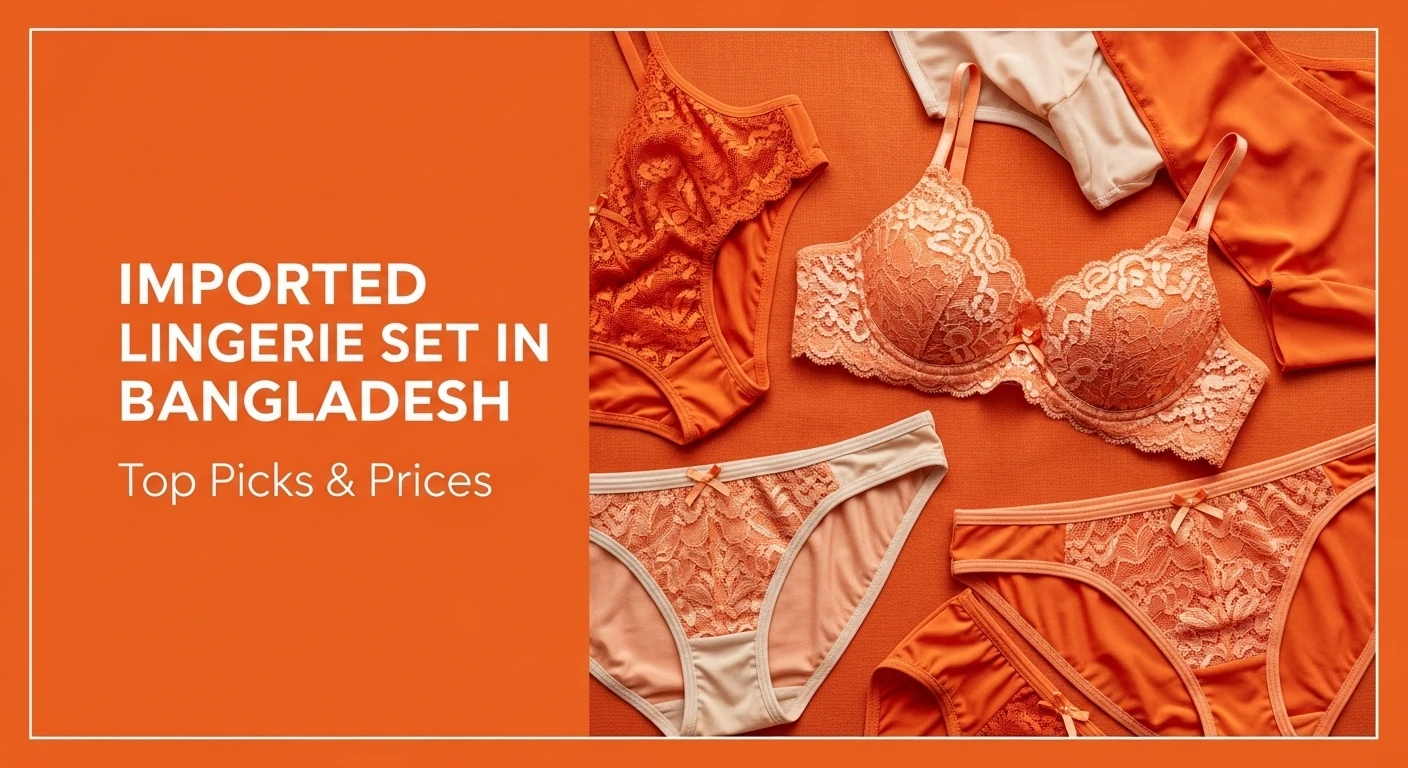
You can browse a wide range of bra styles at AliPeak including wired and wireless options across different styles in the lingerie sets collection with delivery across Bangladesh.
Understanding What the Underwire Actually Does
Before comparing the two types, it helps to understand what underwire is there for — because many women wear underwire bras without a clear sense of why, and many avoid them without understanding what they are giving up.
Underwire is a thin, semi-rigid strip of metal or plastic that runs along the bottom and sides of each bra cup, following the natural curve of the breast. Its purpose is structural: it defines and maintains the shape of each cup independently, lifting the breast tissue from below and containing it from the sides, and anchoring the cup to the chest wall. In doing so, it provides a level of shaping, lift, and breast separation that is difficult to achieve in a wire-free construction without significant engineering effort.
For women with smaller cup sizes, the underwire's structural contribution is modest — the breast tissue is light enough that the band and cup fabric alone can manage it adequately. For women with larger cup sizes, the underwire makes a more significant functional difference — it is doing meaningful mechanical work to support heavier breast tissue in a defined position.
This is why the wired vs wireless debate does not have a single universal answer. The right answer depends substantially on cup size, because the underwire is doing more work — and is therefore more worth tolerating — for larger cup sizes than for smaller ones.
The Case for Wired Bras
Superior shaping and silhouette: Underwire bras create a more defined, lifted, and separated breast silhouette than most wire-free alternatives. Under fitted clothing — a structured kameez, a blouse, a button-down shirt — the shape created by an underwire bra looks cleaner and more defined. This matters for women who care about how their clothes look and sit on the body.
Better support for larger cup sizes: For women with C cup and above, underwire bras typically provide better structural support than wire-free alternatives in the same price range. The wire's mechanical contribution to lifting and containing breast tissue from below means less reliance on the band and straps alone, which distributes the support load more effectively. Without underwire, a wire-free bra for a D cup or above needs to compensate with more engineering in the band and cup construction — which is achievable at premium price points but less reliably so at mid-range and below.
Longer lasting shape retention: Underwire bras maintain their cup shape through more wear and washing cycles than wire-free bras, because the wire provides a rigid structural element that does not deform with use. A quality underwire bra worn regularly retains its cup shape for a year or more; a wire-free bra of comparable quality may begin to lose its cup definition sooner.
Wide availability in specific styles: T-shirt bras, push-up bras, balconette bras, strapless bras, plunge bras — the most widely available versions of all these styles in Bangladesh incorporate underwire. Finding these styles in quality wire-free versions is possible but requires more deliberate searching.
The Case for Wireless Bras
Comfort for extended daily wear: This is the most compelling and most frequently cited argument for wire-free bras, and it is backed by real experience. An underwire bra that fits perfectly is comfortable throughout the day. But an underwire bra that is even slightly wrong — wrong cup size, underwire sitting on breast tissue rather than below it, wire that has shifted its position with wear — becomes increasingly uncomfortable as the day goes on. The discomfort is cumulative: at two hours it is a minor irritation, at six hours it is noticeable distraction, at ten hours it is genuine pain.
Wire-free bras eliminate this failure mode entirely. They have no rigid structural element to poke, dig, or migrate. A well-fitted wire-free bra is consistently comfortable from first wear to end of day in a way that even a good underwire bra can occasionally fail to be.
Bangladesh's heat and humidity: This factor is specific to the Bangladeshi context and deserves emphasis. Underwire bras create a point of pressure and friction where the wire meets the skin — at the base of the breast, along the ribcage, and at the sides. In cool, dry conditions this pressure is barely perceptible. In Bangladesh's warm, humid months — March through October — the same pressure points become sources of sweat accumulation, skin irritation, and sometimes heat rash. Women who experience underboob discomfort in summer often find that switching to wire-free bras during the warm months significantly reduces or eliminates this problem.
Freedom of movement: Wire-free bras flex with the body rather than maintaining a rigid cup structure. For women whose daily lives involve a lot of physical movement — bending, reaching, sitting and standing repeatedly, commuting — this flexibility makes a perceptible difference in comfort. The underwire's rigidity, which creates the silhouette advantage, is also the thing that makes it less comfortable during active, physical days.
Increasingly good support at quality tiers: The narrative that wire-free bras do not provide adequate support is increasingly outdated. Quality wire-free bras at the mid-range and above use wide bands, structured cup panels, side boning, and high-elastane fabrics to provide genuine support without underwire. The engineering has improved significantly. For smaller and medium cup sizes particularly, a quality wire-free bra provides completely adequate support for a full day.
Better for specific health situations: Wire-free bras are recommended during pregnancy and breastfeeding (underwire can block milk ducts), for women who have recently had breast surgery, for women with certain chest wall conditions, and for women who experience cyclical breast tenderness. These are situations where wire-free is not just more comfortable but genuinely the right medical choice.
Reduced risk of long-term wear issues: While the evidence is not conclusive, there is ongoing discussion in medical literature about whether prolonged daily underwire wear at incorrect fit has any negative effects on breast tissue and lymphatic circulation. There is no definitive proof of harm from properly fitted underwire bras. However, the key phrase is properly fitted — an underwire that sits on breast tissue rather than on the chest wall is not properly fitted, and this is extremely common. A wire-free bra cannot have this specific problem.
What Happens to the Underwire in Bangladesh's Wash Conditions
This is a practical consideration unique to the Bangladeshi context that is rarely discussed.
Machine washing on vigorous cycles — common in many Bangladeshi households — is one of the fastest ways to damage underwire bras. The agitation of machine washing bends the wire out of its original curved shape, causes it to shift position within the casing, and accelerates the wear-through of the casing fabric that leads to the wire poking through.
Hand washing, which is better for lingerie generally and which is more commonly practiced for delicate items in Bangladesh, is gentler on underwire. However, even with hand washing, underwire bras require careful handling — no wringing, no compression, reshaping and laying flat to dry — that wire-free bras do not need to the same degree.
Wire-free bras are simply easier to wash, easier to dry, and more resistant to damage from the washing and drying conditions common in Bangladeshi households. This practical maintenance advantage compounds over the lifespan of the garment.
The Fit Factor: Why Most Underwire Problems Are Actually Fit Problems
The most important insight in this entire comparison is this: most of the discomfort and health concerns associated with underwire bras are not caused by the underwire itself but by underwire bras that do not fit correctly.
A correctly fitted underwire bra — where the wire lies flat against the chest wall at the base and sides of the breast, entirely on ribcage rather than on breast tissue, with the centre panel lying flat against the sternum — is comfortable to wear all day and does the structural work it is designed to do effectively.
An incorrectly fitted underwire bra — which describes most of the underwire bras worn by most women in Bangladesh, because correct fitting is rarely available — has the wire in the wrong position. It may sit on breast tissue rather than below it, it may gap away from the body, it may dig into the side of the breast. In this position, the wire is not doing its designed job correctly and is instead creating pressure in places that accumulate discomfort through the day.
This means that many women who have concluded that underwire bras are uncomfortable may have simply never worn an underwire bra that fits them correctly. The experience of wearing a correctly fitted underwire bra is often revelatory for women who have never had one — it is comfortable, supportive, and does not dig or poke.
The inverse is also true: women who find wire-free bras completely adequate may have been wearing underwire bras in the wrong size their whole lives and drawing conclusions about the style from that experience.
The practical implication: before concluding that underwire bras are not right for you, try one in your correctly measured size. Take your underbust measurement for the band, calculate your cup size from the difference between bust and underbust, and try an underwire bra in that actual size. The experience may be different from what you have had before.
Cup Size as the Primary Decision Variable
This is the single most useful framework for this decision, and it is more reliable than any general recommendation.
AA and A cup: Wire-free bras are almost always adequate and often preferable. The breast tissue is light enough that structural underwire support is not needed, and a quality wire-free bra in this size range provides perfectly good shaping and support without the discomfort risk of underwire. Bralettes and soft-cup wire-free bras are excellent choices for this cup range.
B cup: The tipping point. Many women with B cups are genuinely comfortable in either style. A quality wire-free bra provides adequate support. An underwire bra provides a more defined silhouette. Personal preference, daily activities, and climate comfort are the deciding factors here. Many B cup women use both — underwire for days when silhouette matters, wire-free for long active days and warm weather.
C cup: The balance shifts toward underwire for best support, but quality wire-free bras remain viable — particularly at mid-range and above where wire-free engineering is stronger. Comfort preference matters more at this cup size than at smaller sizes, because both types provide adequate support but the comfort difference between a well-fitted underwire and a quality wire-free bra is more perceptible.
D cup and above: Underwire typically provides noticeably better support than equivalent wire-free alternatives at the same price point. For all-day wear at this cup size, an underwire bra that fits correctly is generally more comfortable and more supportive than a wire-free alternative. However, quality wire-free bras specifically engineered for fuller cup sizes — with wide bands, structured side panels, and power mesh fabrics — are available at premium price points and do provide genuine support. Wire-free for this cup range is an option but requires spending more to get the same support level.
DD and above: Underwire is the strong recommendation for all-day support. The engineering of well-fitted underwire bras for larger cup sizes distributes the support load most effectively. Wire-free alternatives at comparable support levels require significant investment in premium construction.
The Seasonal Strategy for Bangladesh
Bangladesh's climate creates a clear seasonal argument for flexible bra wardrobe management.
March through October (warm to hot and humid): The heat and humidity argument for wire-free bras is strongest in these months. The pressure points of underwire become more uncomfortable as sweat accumulates at the contact areas. For women who find underwire bras perfectly comfortable in cooler months but increasingly irritating as the temperature rises, switching to quality wire-free alternatives for the warm season is a practical and sensible approach.
November through February (cooler months): Bangladesh's brief winter season reduces the heat and humidity factor significantly. For women who prefer the silhouette of underwire bras, the cooler months are the most comfortable time to wear them. The reduced perspiration means the pressure point irritation is minimal.
This seasonal approach — wire-free for warm months, underwire for cooler months, with personal preference and cup size guiding the balance — is used by many experienced Bangladeshi women who have thought carefully about their wardrobe.
Style Considerations: What Each Type Works Best With
Underwire bras work best for: Fitted kurtis and blouses where a defined silhouette matters. T-shirts and fitted tops where breast shape is visible through the fabric. Any outfit where you want the most lifted, defined, separated breast appearance. Formal and professional dress contexts. Occasions where your outfit's silhouette is a priority.
Wire-free bras work best for: Loose, flowy clothing where the specific breast silhouette under the fabric is less visible or relevant. Long working or studying days where comfort over ten or more hours is the priority. Physical activity days involving frequent movement, bending, and reaching. Any day in Bangladesh's warm months where heat and sweat accumulation are significant concerns. Home wear and casual days where comfort over appearance is the priority. All maternity and breastfeeding contexts without exception.
Common Myths About Wired and Wireless Bras
Myth: Wire-free bras do not provide enough support. False for smaller cup sizes, increasingly false for medium cup sizes as wire-free engineering improves. Still partly true for larger cup sizes at lower price points, where wire-free alternatives require more investment to match underwire support.
Myth: Underwire bras cause breast cancer. This claim has been thoroughly investigated and no credible scientific evidence supports a link between underwire bras and breast cancer. The concern was based on a study with significant methodological problems and has not been replicated in rigorous research.
Myth: Wire-free bras are only for smaller women. Completely false. Quality wire-free bras are available in larger cup sizes and provide genuine support for women across the size range. The engineering investment required increases with cup size, but well-made wire-free bras for larger cup sizes exist and work.
Myth: If your underwire bra is uncomfortable it means you are wearing the wrong size. Often true but not always. Some women have chest wall shapes that are incompatible with standard underwire positioning regardless of how accurately they measure. For these women, wire-free bras are simply the better permanent choice regardless of size.
Myth: Bralettes are the same as wireless bras. Not exactly. Bralettes are a subset of wire-free bras — typically unstructured, very soft, with minimal shaping. Not all wire-free bras are bralettes. Many wire-free bras provide significant structure and shaping through cup construction and band engineering without any underwire. Bralettes are appropriate for smaller cup sizes; structured wire-free bras serve the full size range.
Price: Is One Type More Expensive Than the Other?
At the budget tier (under ৳500), underwire bras are slightly more widely available than quality wire-free alternatives. Budget wire-free bras at this price point often provide minimal support and structure.
At the mid-range (৳500 to ৳1,500), both types are well-represented in the Bangladeshi market and comparably priced for equivalent quality.
At premium price points (৳2,500 and above), high-quality examples of both types are available. For larger cup sizes, premium wire-free bras with full engineering for support may cost slightly more than equivalent underwire bras because the engineering investment required is higher.
The practical conclusion: type is not the cost driver. Fabric quality, construction precision, and support engineering are the cost drivers, and both wired and wireless bras span the full price range.
The Practical Recommendation for Most Bangladeshi Women
For most Bangladeshi women — factoring in the climate, the typical cup size distribution, the length and demands of a typical Bangladeshi working or home management day, and the washing conditions — the most practical approach is not a binary commitment to one type.
For smaller cup sizes (AA to B): Build your wardrobe primarily around quality wire-free bras and bralettes. The support compromise is minimal and the comfort gain is real, particularly in Bangladesh's warm months. Keep one or two underwire bras for occasions where silhouette matters specifically.
For medium cup sizes (C): Own both. A quality underwire bra for professional and formal contexts where silhouette matters. One or two quality wire-free alternatives for long comfortable days, warm weather, and physical activity.
For fuller cup sizes (D and above): Invest in well-fitted underwire bras as the primary everyday choice for support and silhouette. Supplement with quality wire-free alternatives for home wear, warm months, and any context where comfort over support is the priority for the day.
For all women during pregnancy and breastfeeding: Wire-free exclusively. No exceptions.
Browse both styles across all cup sizes and price points at AliPeak. The lingerie sets collection covers wired and wireless styles in everyday and occasion configurations with clear product descriptions and nationwide delivery across Bangladesh. Use your correctly measured size as the starting point for any bra purchase — wired or wireless — and the specific style decision will produce a much better outcome than choosing by style alone without accurate sizing.
 english




 Automotive
 Gifts & Occasions
 Electronics & Computers
 Fashion & Apparel
 Beauty & Personal Care
 Home & Lifestyle
 Sports & Fitness
 Books, Movies & Music
 Baby & Kids