When most women in Bangladesh think about bra shopping, they think about size — band and cup number — and colour, and maybe price. Cup style, meaning the shape and coverage of the cup itself, is a consideration that most buyers give very little thought to. And yet cup style is one of the factors that most directly affects how a bra looks and feels in daily wear, how it works under different necklines, and how flattering it is for different body types.
The two most widely available cup styles in Bangladesh — and the two that come up most often in online lingerie listings — are the full cup and the demi cup. They look similar in product photos. They are described with similar language. But they create noticeably different silhouettes, serve different purposes, and suit different body types and outfit combinations.
This guide explains exactly what each cup style is, how they differ in practical wear, which body types each suits best, which outfits and necklines each works with, and how to choose between them based on your own body and daily wardrobe. It also addresses the specific context of Bangladeshi women — the typical clothing choices, body proportions, and daily lifestyle that should inform the decision.
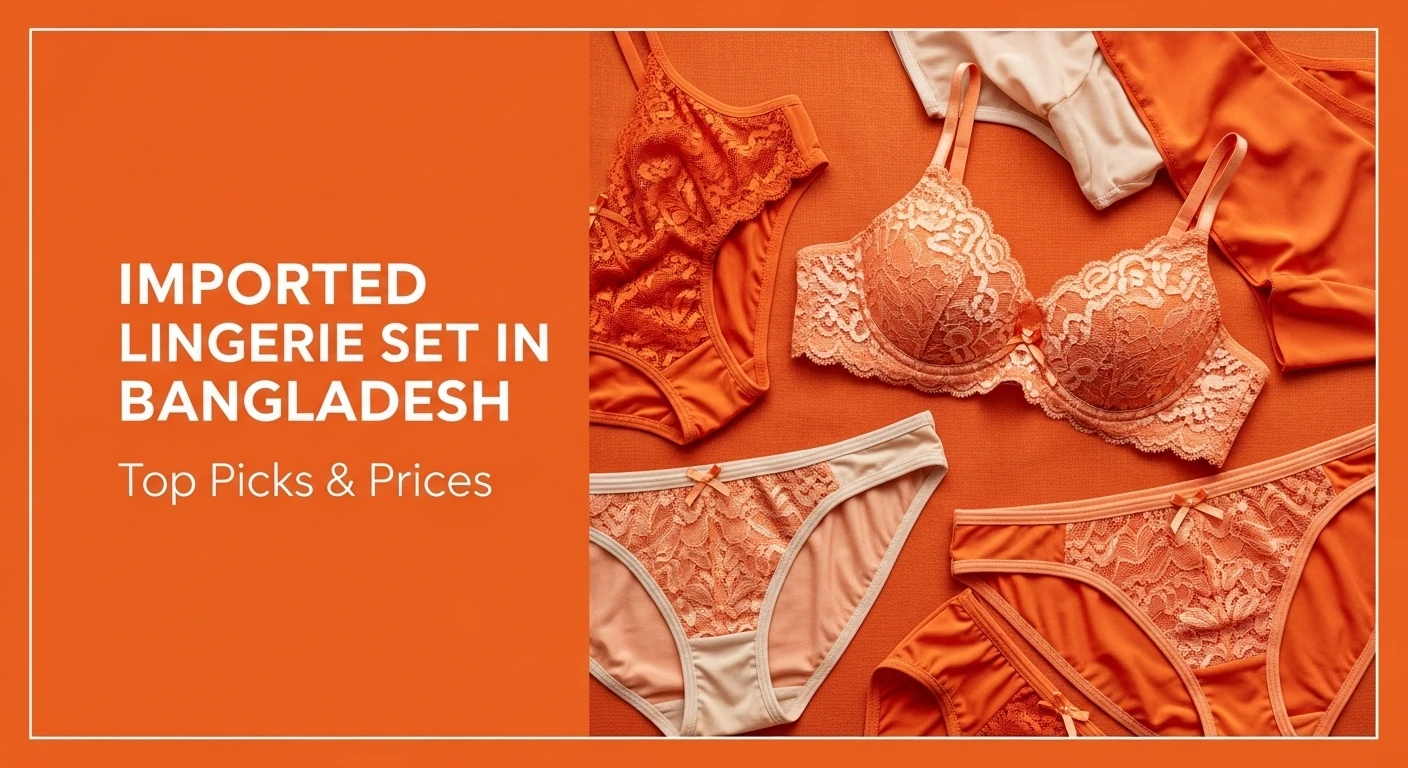
You can browse a range of bra styles in both cup configurations at AliPeak, including the lingerie sets collection with delivery across Bangladesh.
Defining Full Cup and Demi Cup
Full cup bra: A full cup bra, also called a full coverage bra, has cups that fully enclose the entire breast. The top edge of the cup reaches to or slightly above the nipple line, covering the upper portion of the breast completely. The sides of the cup extend further around toward the underarm, capturing any breast tissue that tends to migrate toward the sides. A full cup bra is typically paired with wider straps that attach further toward the outer edge of the cup.
The defining characteristic of a full cup bra is total containment — all breast tissue is fully covered and supported within the cup at all times, in all positions, and with any movement.
Demi cup bra: A demi cup bra, also called a half cup bra, has cups that cover approximately the lower half to two-thirds of the breast. The top edge of the cup sits lower than in a full cup bra — typically at or slightly below the nipple line — leaving the upper portion of the breast exposed above the cup. The straps attach closer to the centre of the cup rather than at the outer edge, which pulls the breast slightly inward and creates a more rounded, centred silhouette.
The defining characteristic of a demi cup is partial coverage — the cup lifts and shapes the breast from below and sides but does not cover the top. This creates a specific visual effect: a rounded, lifted shape with visible décolletage above the cup line.
Both styles are available in wired and wireless versions, in padded and unpadded constructions, and in a wide range of fabrics from plain cotton to lace overlay.
The Visual and Functional Differences in Wear
Understanding what each style actually looks and feels like when worn helps clarify when each is the right choice.
What a full cup bra looks like when worn: The breast is fully enclosed and supported. The silhouette under clothing is smooth and contained, with no breast tissue visible above the bra line. Under a T-shirt or fitted kurti, a full cup bra creates a smooth, rounded profile. The straps sit at the outer shoulder. There is typically no visible cleavage — the top of the breast is covered by the cup.
What a demi cup bra looks like when worn: The lower and middle breast is supported and lifted; the upper breast curves naturally above the cup line. Under clothing with any neckline that sits below the cup's top edge, the upper breast is visible between the bra and the neckline. This creates a rounded, lifted appearance with noticeable décolletage and breast curvature. The straps sit closer together at the shoulder, creating a slightly narrower strap placement than a full cup.
Support comparison: Full cup bras generally provide more total breast support because the cup wall surrounds more of the breast tissue. For larger cup sizes, the additional cup coverage of a full cup bra distributes the support load across a greater surface area, which is both more structurally effective and more comfortable for extended wear.
Demi cup bras provide excellent lift and shaping from below and sides but provide less coverage of the upper breast. For smaller and medium cup sizes this is entirely adequate. For larger cup sizes, the open top edge of a demi cup can result in breast tissue spilling or overflowing above the cup — a fit problem called double-bubbling that indicates either the wrong cup style or the wrong cup size.
Comfort comparison: Full cup bras are often perceived as more comfortable for all-day wear because the cup's complete coverage distributes pressure evenly and the wider fabric contact reduces the sense of the bra being a distinct structural object pressing against the body. Demi cup bras, with their lower cut, are sometimes perceived as more constricting because the top edge of the cup can press into the breast tissue when the cup does not match the shape of the breast perfectly.
Which Body Types Each Style Suits
This is the most practically useful section for most buyers, and it is where personal body characteristics should guide the decision.
Full cup bras suit:
Women with larger cup sizes (C cup and above) most directly benefit from full cup construction. The complete containment of breast tissue that a full cup provides is both more supportive and more practical for larger breasts — there is no risk of spillage at the top edge, movement in any direction is managed by the cup, and under-bra comfort through a long day is better because the cup is doing its job across the entire breast surface.
Women with breast tissue that tends to migrate toward the top and sides — where the upper and outer portions of the breast tend to escape from partial-coverage cups — will find full cups significantly more comfortable and more reliable.
Women who prioritise modesty and full coverage under their clothing. In Bangladesh's cultural context, where many women wear semi-sheer or thin-fabric salwar kameez and kurtis, full cup coverage ensures that the bra line is not visible at the chest in a way that draws attention.
Women with a softer, more pendulous breast shape that needs to be fully contained within the cup for the best silhouette and comfort.
Demi cup bras suit:
Women with smaller to medium cup sizes (AA to C) who are looking for lift and a rounded shape without the coverage of a full cup. The demi cup is most flattering at these sizes because the breast tissue naturally fills the lower two-thirds of the cup without needing the additional upper coverage.
Women with a fuller upper breast — where the breast tissue is more concentrated in the upper portion. A full cup on this breast shape can feel like the top of the cup is pushing into and flattening the upper breast rather than simply containing it. A demi cup sits lower and lifts the breast from below without the upper cup pressure.
Women whose primary bra requirement is creating cleavage and a rounded, lifted front silhouette — for specific outfit occasions.
Women wearing specific necklines where demi cups are functionally necessary — lower necklines, V-necks, and wide necklines where a full cup's top edge would be visible above the clothing neckline.
Which Necklines Work With Each Style
This is where the practical daily wardrobe consideration is most direct. The right cup style for a specific outfit is often determined by the neckline.
Full cup bras work well with:
High necklines — round necks, boat necks, stand collars, and any neckline that sits high on the chest. The full cup's higher top edge is hidden by these necklines. This covers a very large proportion of traditional Bangladeshi clothing — salwar kameez tops, many kurti styles, traditional blouses.
Moderate V-necks where the V does not descend below the bra line. A full cup bra works under a modest V-neck without being visible, and provides a clean, contained silhouette.
Fitted, structured clothing where you want a smooth, contained silhouette rather than visible décolletage. Office wear, formal wear, and professional contexts where a modest, neat appearance is the priority.
Demi cup bras work well with:
Deeper V-necklines where the neckline descends below the level of a full cup's top edge. A demi cup's lower top edge stays hidden under a deep V where a full cup would be visible.
Wide necklines and off-shoulder styles where the bra strap placement matters — demi cup straps, which sit closer to the centre, are less likely to show at the outer shoulder under wide-neck styles.
Square necklines — the demi cup's lifted, rounded shape creates an attractive curve above a square neckline.
Lower scoop necks where visible décolletage is part of the outfit's intention. The demi cup creates and frames this effect cleanly.
Occasion and evening wear where the neckline is more revealing and the bra's shaping role is more important than complete coverage.
The Bangladeshi Wardrobe Context
This is where the guidance becomes specific to Bangladeshi women rather than generic global advice.
The majority of Bangladeshi women's daily wardrobe is composed of salwar kameez, kurtis, and traditional blouses — garments that typically have moderate to high necklines, are often made in semi-sheer fabrics, and are worn in a variety of contexts from home to office to formal occasions.
For this wardrobe context, the full cup bra is the more versatile and more practical primary bra. The high top edge of a full cup bra is hidden under the necklines of most traditional and everyday Bangladeshi clothing. The complete breast coverage ensures that under semi-sheer or thin fabrics — common in Bangladesh's warm-weather clothing choices — the bra provides a clean, modest silhouette without the bra line being visible or the upper breast showing above the cup.
The demi cup bra is a useful complement for specific occasions and specific outfit choices — particularly for occasion wear, formal events, and modern clothing with lower necklines — but it is not the right primary everyday bra for most Bangladeshi women's typical wardrobe.
There is an important exception: women who wear modern, Western-influenced clothing regularly — fitted shirts with lower necklines, V-neck tops, scoop-neck kurtis — will find the demi cup bra more useful in daily rotation alongside a full cup option.
The practical conclusion for most Bangladeshi women: build your primary bra wardrobe around full cup or moderate-coverage styles, and add one or two demi cup bras for the specific occasions and outfits where they are functionally better.
The Balconette: The Middle Ground Worth Knowing
Between full cup and demi cup sits a style that is not always discussed clearly but deserves to be: the balconette bra.
A balconette bra has a wide, low, horizontal cup that sits like a shelf — lower than a full cup but shaped differently from a demi cup. Where a demi cup is cut diagonally across the breast, a balconette is cut horizontally, creating a flat top edge across both cups and a wide, low frame that emphasises the upper breast curve.
The balconette's wide-set strap placement makes it well-suited to wide necklines and boat necks — contexts where neither full cup nor demi cup is ideal. The flat horizontal top edge creates a specific, theatrical décolletage effect that is popular for occasion wear.
For Bangladeshi women who wear boat-neck kurtis, wide-neck blouses, and certain traditional blouse styles, a balconette bra is often the most flattering choice for that specific neckline — more so than either a full cup or a demi cup.
Common Fit Problems and What They Tell You About Cup Style
Certain fit problems indicate a cup style mismatch rather than a size problem.
Breast tissue spilling over the top edge of the cup: This is the most common sign of an ill-fitting demi cup. It may indicate the cup size is too small, but it may also simply indicate that the demi cup style does not suit your breast shape — particularly if you have a fuller upper breast or larger cup size. Switching to a full cup in the same band and cup size often solves this without changing the size.
The top edge of the cup pressing into and flattening the upper breast: This is the inverse problem — a sign that the full cup's top edge is sitting on breast tissue rather than above it. Common in women with a fuller upper breast projection who find the full cup's higher cut creates a ridge rather than clean containment. A demi cup or balconette style may fit this breast shape better.
Cups that wrinkle or gape at the top: In a full cup bra, wrinkling at the top edge indicates that the cup is too large or that the breast's projection does not fill the upper cup. In a demi cup, this may mean the cup size is too large. In both cases, dropping one cup size or trying a shallower cup shape resolves the issue.
Straps that fall off the shoulder: More common with demi cup bras because the wider strap placement of full cups provides better lateral strap stability. If straps consistently fall with demi cup styles, a full cup with further-set straps, or a racerback conversion, may help.
Seeing the bra cup edge through clothing: If the top edge of the cup is visible through the neckline of your clothing, the cup style is wrong for the neckline — switch to a demi cup, or choose a different outfit. If the cup is visible because it is simply too large for the neckline even in a demi cup, an adhesive bra or a different outfit choice is needed.
Sizing Considerations for Each Style
Cup style does not change your actual bra size — a woman who measures as a 34C is a 34C in both full cup and demi cup. However, there are some sizing nuances worth understanding.
Demi cups run slightly small in the cup: Because a demi cup's lower cut means the cup encompasses less of the breast, some women find they need to go up half a cup size in a demi cup to get the same containment they have in a full cup. If a 34C full cup fits you well but the 34C demi cup feels tight or causes spillage at the top edge, try 34D in the demi cup style before concluding the style does not work for you.
Full cups may run slightly generous: The additional upper cup coverage in a full cup bra means that women with less breast tissue in the upper half of the breast may find the cup gapes at the top even in their measured size. This is a shape rather than size issue — the cup is correct in volume but too deep for the breast's projection profile. Some women go down half a cup size in full cup bras for this reason.
These are tendencies, not rules: Brand variation and construction differences mean these tendencies do not apply universally. Always check the specific brand's size chart and reviews for comments on sizing before ordering.
Building a Practical Bra Wardrobe for Both Styles
For most Bangladeshi women, the practical recommendation is not to choose exclusively between full cup and demi cup but to own both in a ratio that reflects the reality of your daily wardrobe.
A sensible wardrobe allocation: two to three full cup bras in versatile everyday colours (nude, black, white) for daily wear under the majority of your clothing. One to two demi cup bras in colours suited to specific occasion outfits for the necklines and occasions where demi cups perform better. One balconette if your wardrobe includes wide-neck or boat-neck styles where the balconette's horizontal cut is the most flattering option.
This combination ensures you always have the right cup style for whatever you are wearing, without committing to one style that serves only part of your wardrobe needs.
For women building their bra wardrobe from scratch or with a limited budget, start with two full cup bras in everyday colours. Add a demi cup when you have a specific outfit — a V-neck occasion top, a lower neckline — that clearly calls for it. Build toward the complete wardrobe over time rather than buying everything at once.
Browse both full cup and demi cup styles across different brands and price points at AliPeak. The lingerie sets collection includes bra sets in different cup configurations alongside matching briefs, with product descriptions and sizing information to help you make the right choice based on the guidance in this article. Nationwide delivery makes it straightforward to build your complete bra wardrobe regardless of where in Bangladesh you are based.
The right cup style — chosen based on your cup size, your breast shape, and your daily wardrobe — is one of the most quietly impactful lingerie decisions you can make. It changes how your clothing fits and looks, how comfortable your bra is across a long day, and how confident you feel in what you are wearing from morning until night.
 english




 Automotive
 Gifts & Occasions
 Electronics & Computers
 Fashion & Apparel
 Beauty & Personal Care
 Home & Lifestyle
 Sports & Fitness
 Books, Movies & Music
 Baby & Kids